

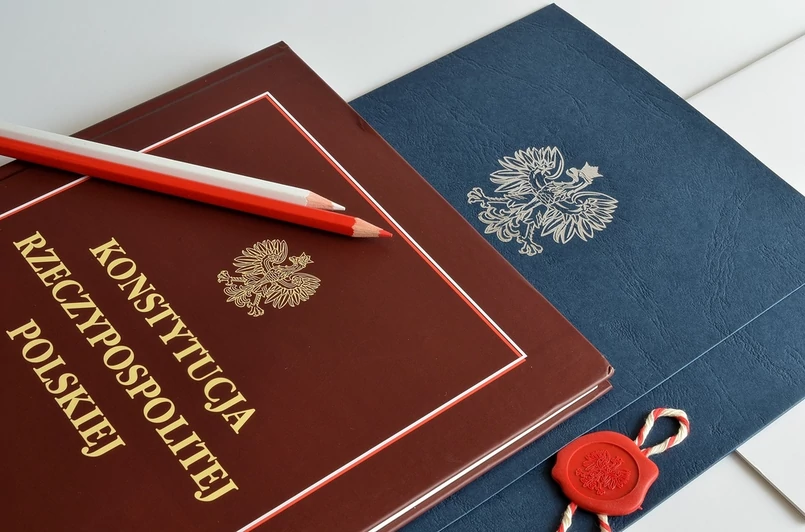
How to lose Polish citizenship? This issue raises and raises questions. This can be due to various reasons and is regulated by specific laws. It is worth knowing the basic rules and consequences associated with the loss of citizenship.
How you used to be able to lose your Polish citizenship – conditions
The Act on Polish citizenship is constantly changing and shaping – especially in the context of its loss. Conditions that could result in loss of citizenship include:
▪ naturalization/acquiring citizenship of another country;
▪ extending the loss of citizenship to the wife and children under the age of 18 (due to the loss of Polish citizenship by the husband and father);
▪ joining the military service of another country;
▪ marriage to a citizen of another country.
Until 1951, under the first version of the Act of January 20, 1920 on the citizenship of the Polish State, a citizen of the Republic of Poland lost Polish citizenship by acquiring foreign citizenship. Moreover, the loss of Polish citizenship extended to the wife of the person acquiring or losing Polish citizenship, as well as to his children under the age of 18. This condition was removed in the Act of January 8, 1951 on Polish citizenship. Consequently, a change in the citizenship of one of the spouses did not result in a change in the citizenship of the other spouse.
Amendment
The amendment to the Act of 1951 specified that Polish citizenship was lost to persons who on August 31, 1939 had Polish citizenship, but permanently lived abroad and:
1) in connection with a change in the borders of the Polish State, they acquired citizenship of another country in accordance with an international agreement, or;
2) were of Russian, Belarusian, Ukrainian, Lithuanian, Latvian or Estonian nationality or;
3) were of German nationality, unless the person’s spouse had Polish citizenship and resided in Poland.
The Act of February 15, 1962 on Polish citizenship emphasizes that a Polish citizen, under Polish law, cannot be simultaneously recognized as a citizen of another country.
Militarism
The premise of losing citizenship by entering the military service of another country was reflected in the original version of the Act of 1920 on the citizenship of the Polish State.
A Polish citizen lost their citizenship by accepting a public office or entering military service in a foreign country without the consent of the competent voivode, in cases of intention to join military service in a foreign country, expressed in consultation with the relevant corps district commander.
Persons obliged to active military service could acquire foreign citizenship only by obtaining exemption from general military obligation, in accordance with applicable regulations, otherwise they would not cease to be considered Polish citizens in the eyes of the Polish State.
The Act of January 8, 1951 on Polish citizenship abolished the obligation to obtain consent to enter military service in a foreign country, but a new ground for losing Polish citizenship appeared. According to the amendment to the Act, a Polish citizen who stayed abroad could be deprived of Polish citizenship if:
▪ violated the obligation of allegiance to the Polish State,
▪ acted to the detriment of the vital interests of the People’s Republic of Poland,
▪ illegally left the territory of the Polish State after May 9, 1945,
▪ refused to return to the country when requested by the competent authority,
▪ evades the performance of military duty,
▪ has been convicted abroad for a common crime or is a recidivist.
It should be emphasized that it was a time of strong control and pressure from the USSR on the then authorities of the Polish People’s Republic. The Act of January 8, 1951 on Polish citizenship made it possible to hold accountable all those who were “inconvenient” for the party. The Act of February 15, 1962 on Polish citizenship did not provide for any changes in this respect. Only the current version of the 2009 Act on Polish Citizenship does not provide for loss of citizenship based on joining the military service of another country.
Marriage
Looking at the historical changes in legislation in the context of women, a Polish citizen lost her citizenship through the so-called “marriage” (marrying a foreigner) under the provisions of the Act of January 20, 1920 on the citizenship of the Polish State. The legislation left the option of regaining citizenship in the future in the event of termination of the marriage and resettlement in Poland. This provision lost its force based on the amendment to the Act of January 8, 1951 on Polish citizenship. The conclusion of a marriage by a Polish citizen with a person who is not a Polish citizen did not subsequently result in changes to the citizenship of the spouses. This principle is still observed in Poland today.
Denaturalisation
In special cases, under the provisions of international law, a process of denaturalization may take place. Denaturalization is considered to be the deprivation of a person’s citizenship. Denaturalization can only be applied to persons who acquired citizenship through naturalization (by granting, recognition as a citizen, naturalization or inversion procedure).
How to lose Polish citizenship – EU
The European Union Democracy Observatory on Citizenship has developed current grounds for deprivation of the right to citizenship in the European Union. The most characteristic are:
▪ long stay outside the territory of the country of citizenship;
The Polish legislation does not specify grounds for losing citizenship based on a long absence from the country.
▪ falsification of documents during the naturalization procedure;
If it is proven that false documents, materials or evidence have been presented, a decision may be taken to revoke or cancel citizenship by the highest authorities of the country.
▪ a threat to defense, state security or the protection of public safety and order;
▪ loss of citizenship of the child together with the parents;
▪ completing the adoption process.
The possibility of having two citizenships at the same time was introduced only in the amendment to the Citizenship Act in 2009. The provision states that a Polish citizen who is also a citizen of another country has the same rights and obligations towards the Republic of Poland as a person who has only Polish citizenship. Such a person cannot invoke the citizenship of another country and the resulting rights and obligations towards the authorities of the Republic of Poland with legal effect. And now you know how to lose Polish citizenship.
![Pre-war Polish countryside in archival photographs [GALLERY]](https://yrip.brkts.com/wp-content/uploads/2026/02/Miniaturka_polska_wies-1-1.png)