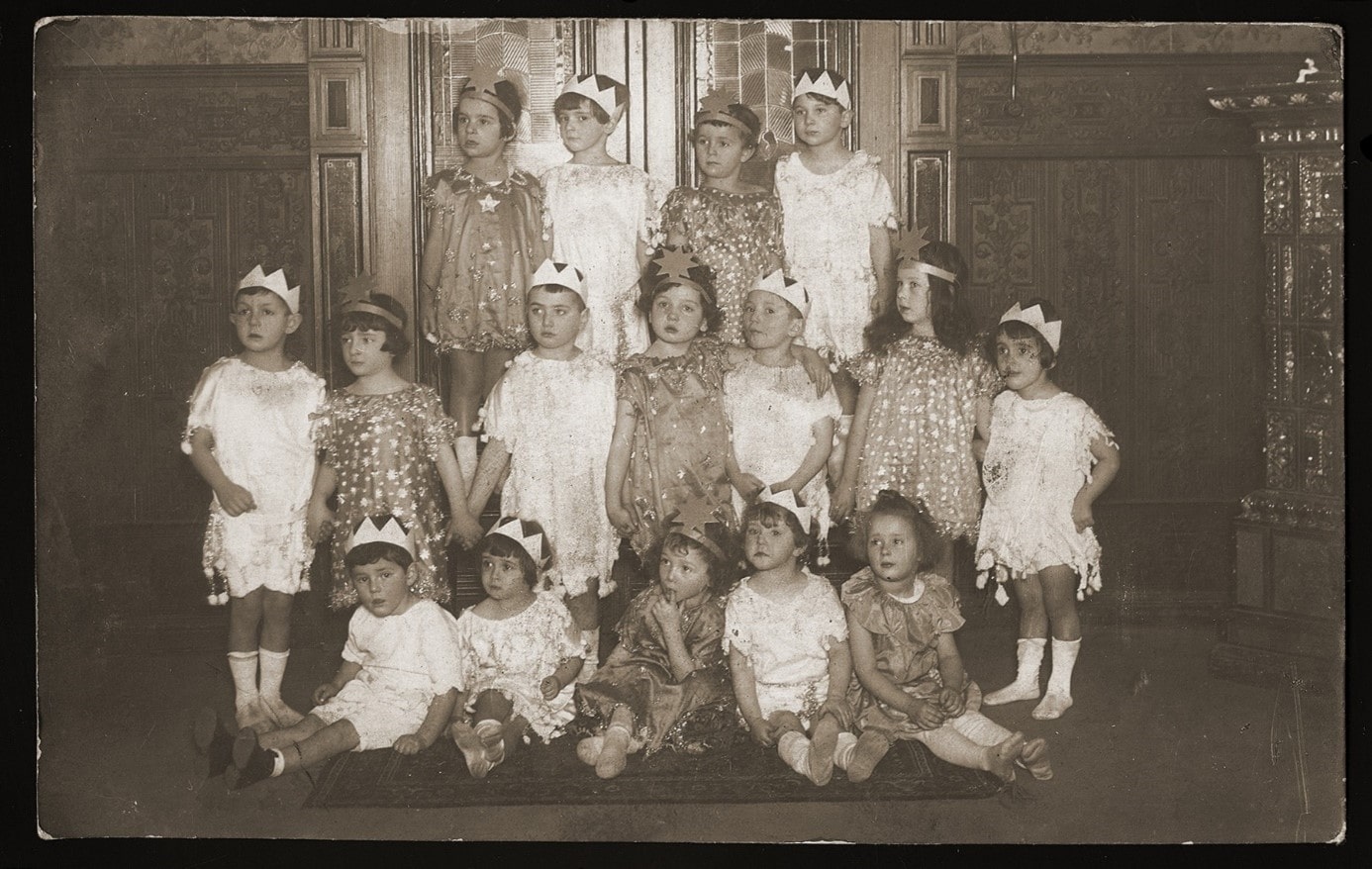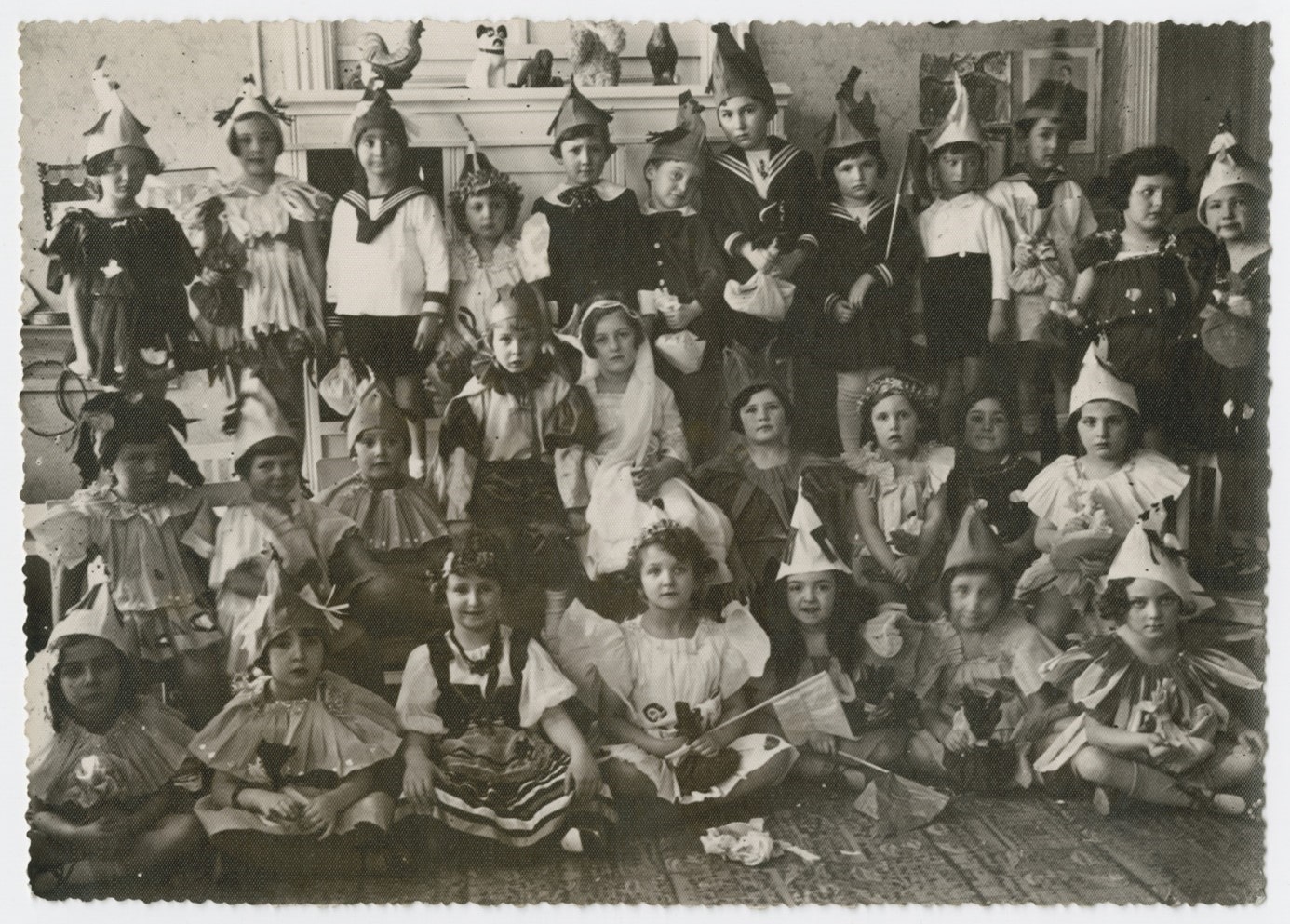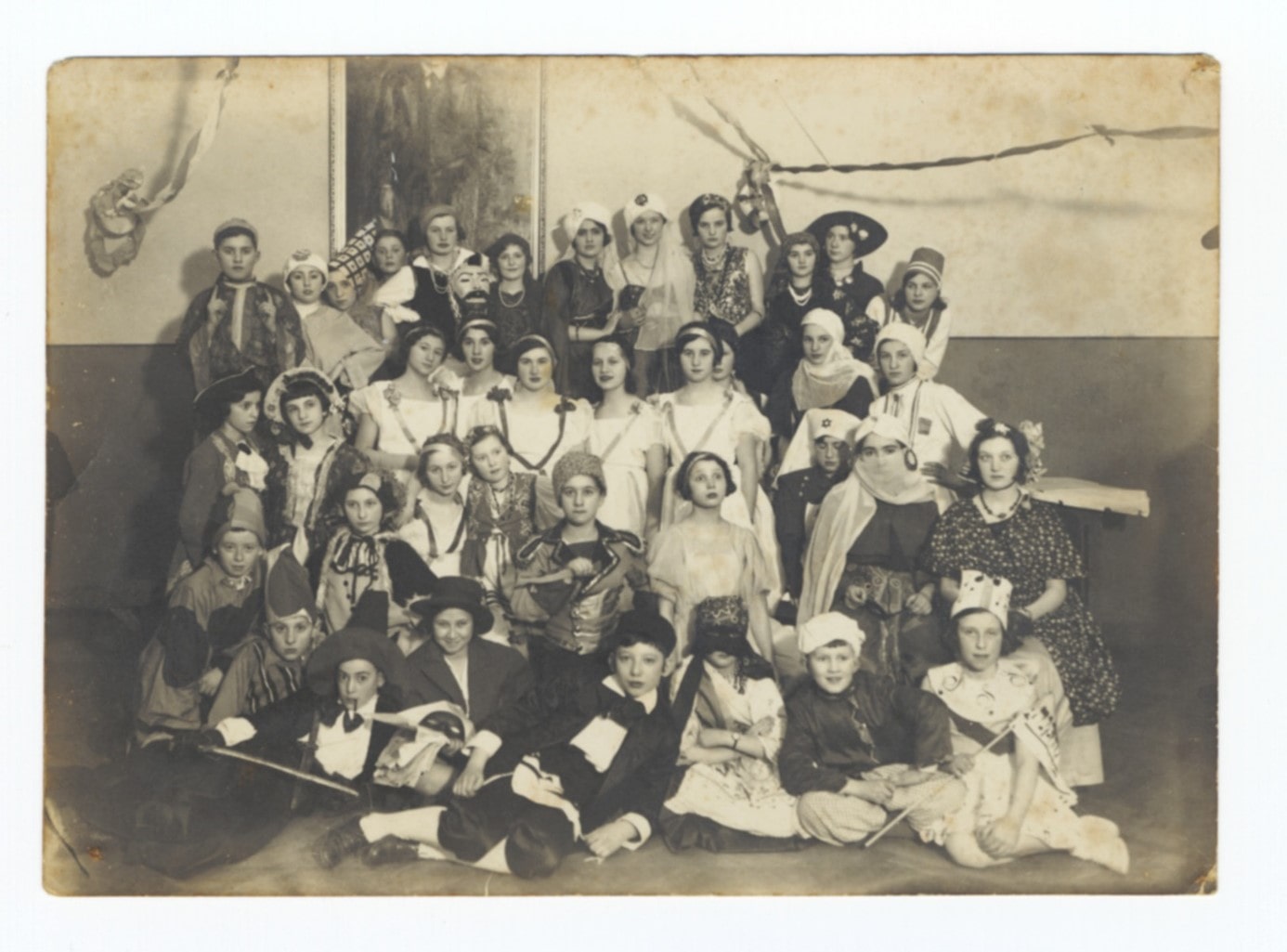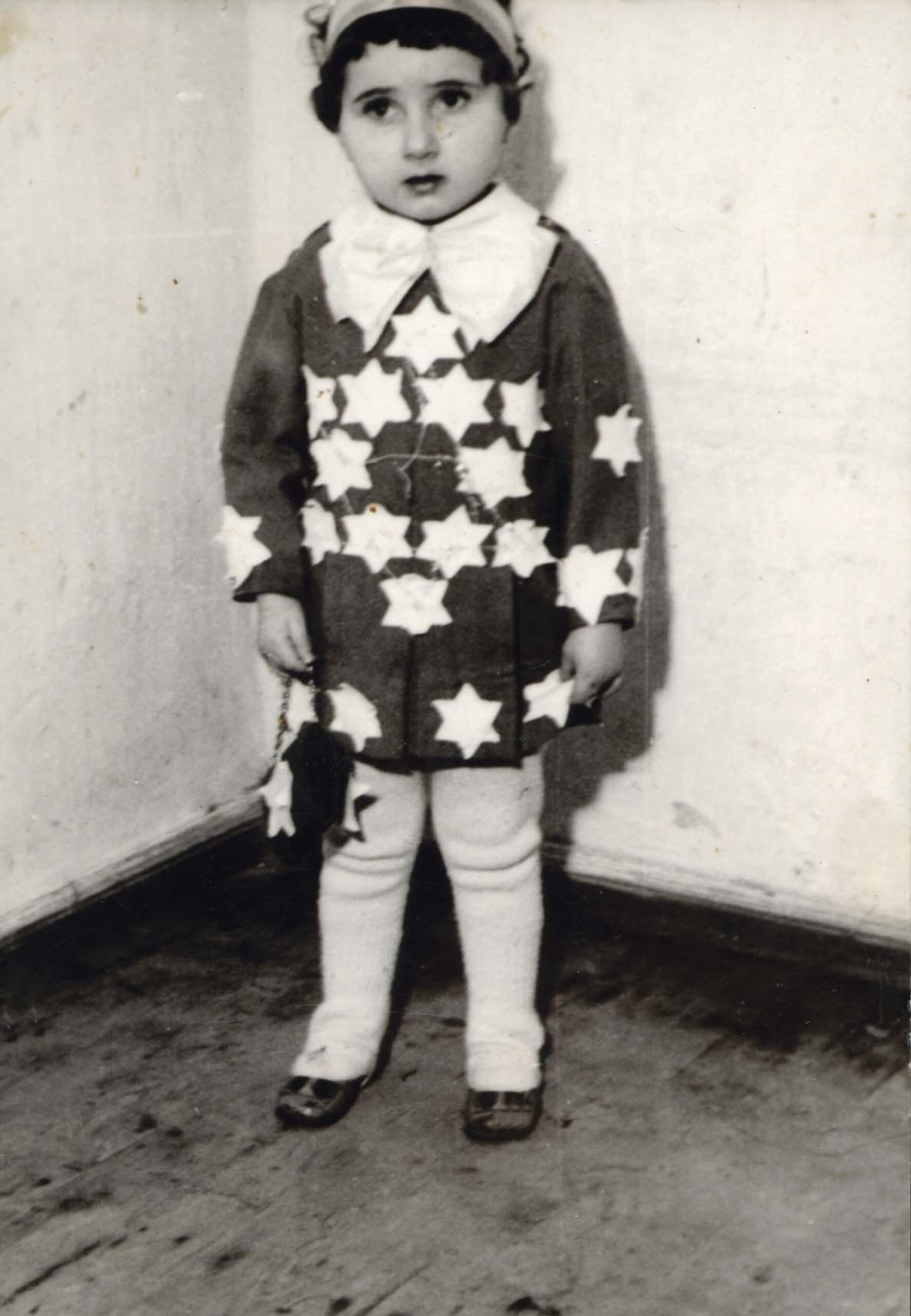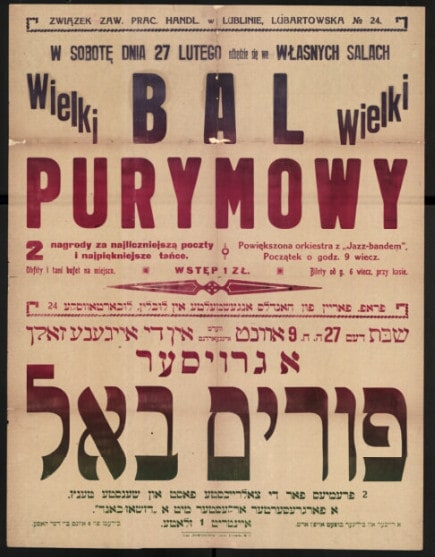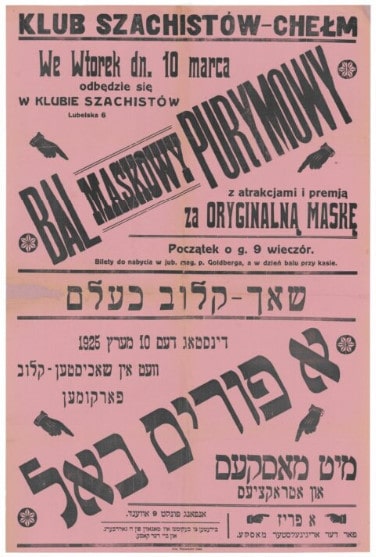

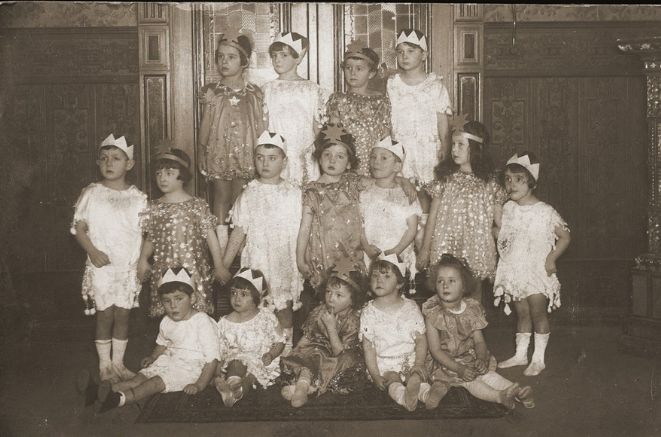
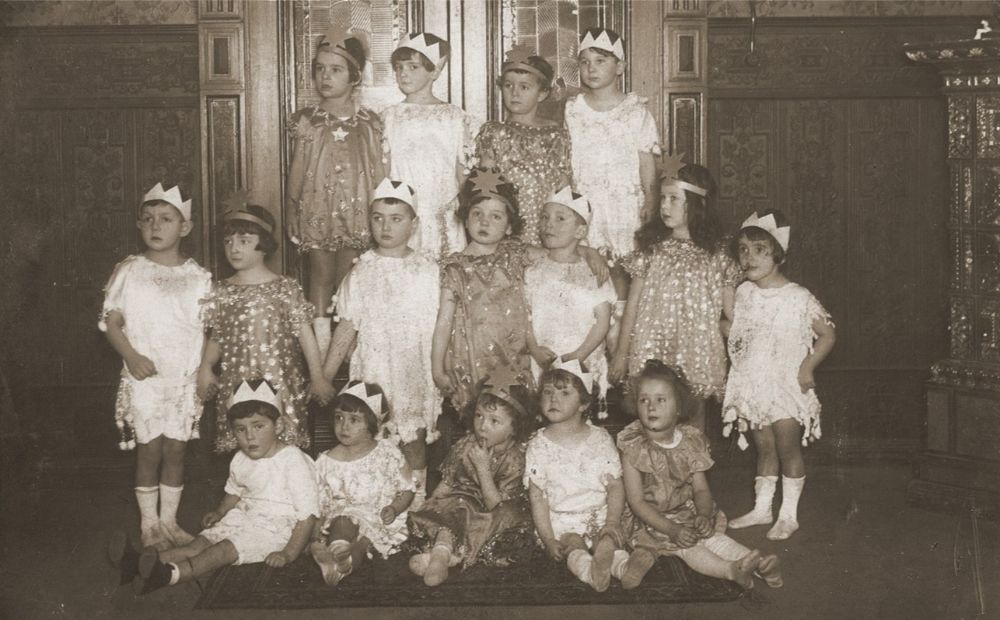
Tens of eyes stared at the scene where unusual things happened that evening – purim. Children with the paper crowns sliding off their foreheads or actors specially selected for that day moved the participants of the show to the fifth century BCE, so that they could witness how the Jews were saved from the hands of menacing Haman.
Purim shpiel
„Purim shpiel”, a performance on the occasion of Purim, came to the territory of Poland around the seventeenth century from Venice via Germany. It was a one-act, folk tale full of humor, played in Yiddish. It usually told the story of Esther and Ahasuerus, although there were other motives, such as David and Goliath, the blessing of Joseph or the blessing of Benjamin (from whom Esther’s uncle Mordechai was descended).
On the eve of the festival, on the 13th of Adar, “Esther’s fast” continues from sunrise to sunset. In the synagogue Jews listen to a megilat of Esther, which in short tells this:
… because Mordecai defied the orders and did not agree to bow to Haman, the supreme official of the king of Persia, Ahasuerus, Haman decided to kill all the Jews on the 13th or 14th day of Adar. Upon discovering intentions of Haman, Esther was terrified, so she began to fast and pray. She also asked the king Ahasuerus to hold a feast to which only Haman would be invited. During the party, she revealed to the king that she was Jewish (which she had kept hidden so far), said that Haman was attacking her and her people, and asked the king for a favor; In addition, Haman was charged with the rape on Esther. This infuriated king Ahasuerus to the point that Haman was hanged and his ten sons were killed.
As the story is read, the audience raises an uproar and makes noise with the help of knockers (Yiddish: grager). The names of Haman’s ten sons are spoken in one breath to emphasize that they died at the same time.
Purim shows
Purim shows often refer to current events. During the purim shpiels exhibited in DP camps after the war, the figure of Haman was often replaced with a Hitler resemblance. Regardless of the circumstances, in Purim songs, there is always the same message: to live like other nations and not to fade away, to enjoy and see the joy of your fellow-brothers, to share the faith that evil must perish and that it will finally perish, to express what you think about the world and its leaders. Each time it is a celebration of victory over historical and modern Hamans.
Purim – what is the atmosphere?
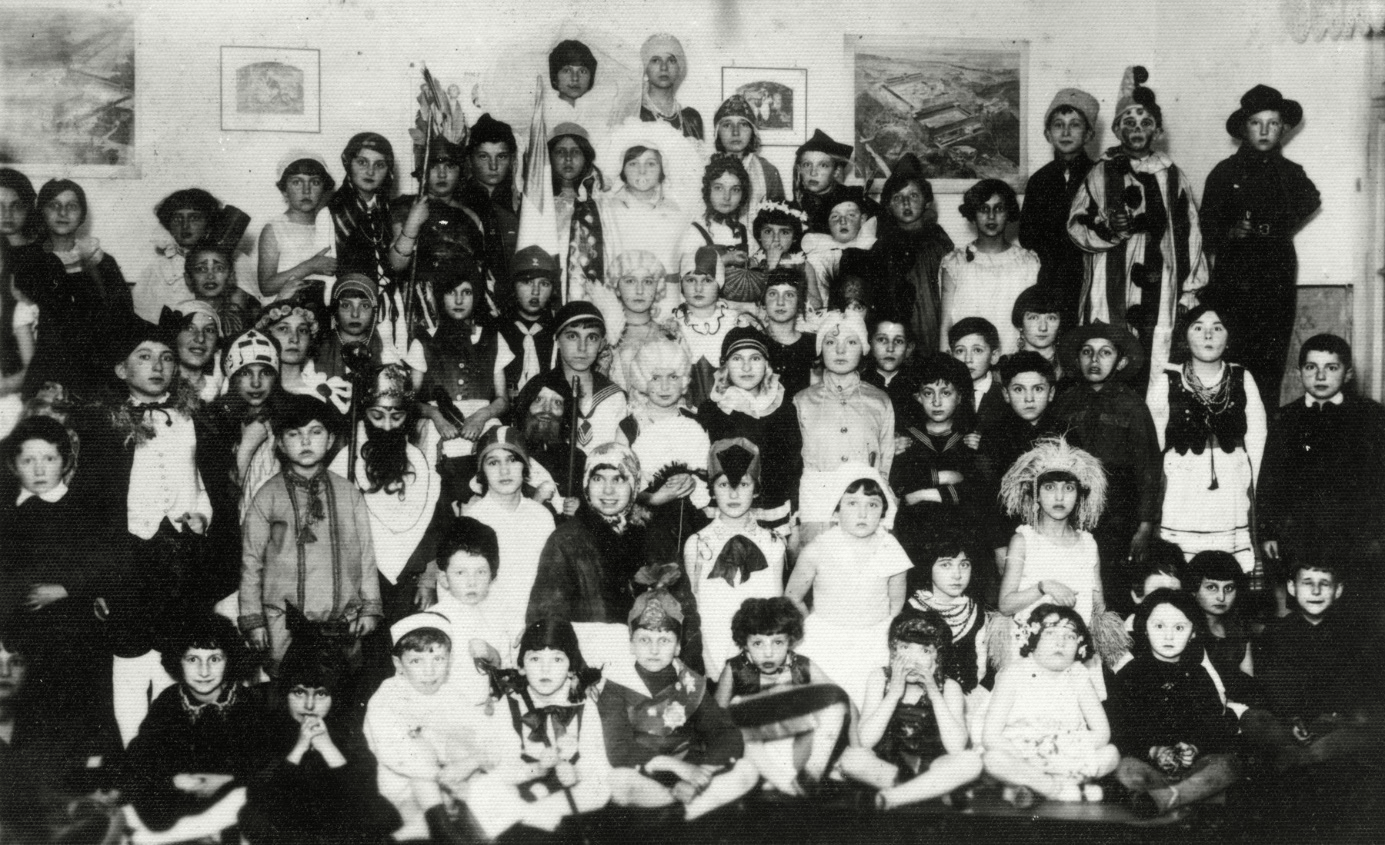
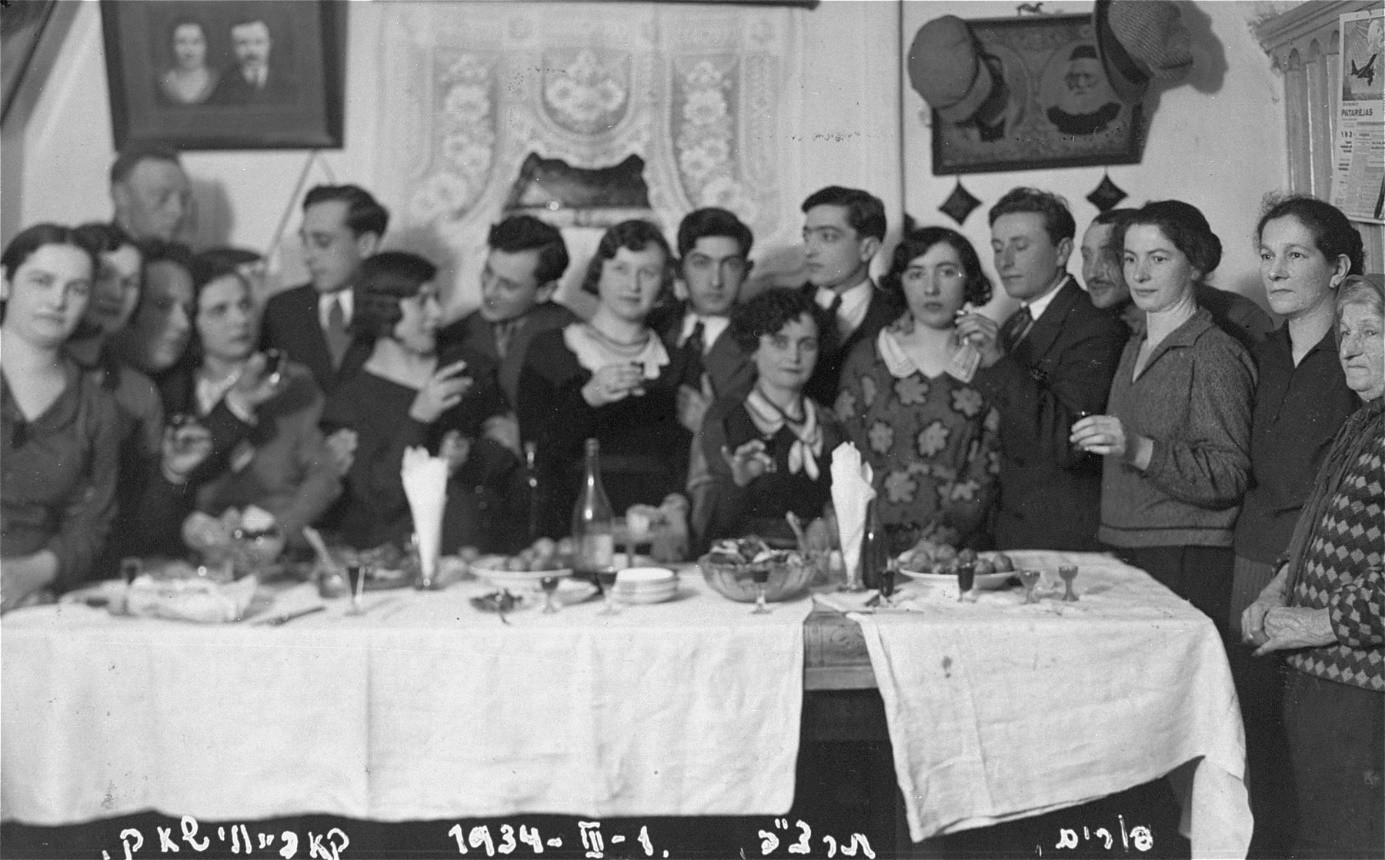
Purim is accompanied by dances, merry parades and masquerades. Even quite serious Jewish youths from the yeshiva, and later old scholars and rabbis indulged in jokes, choosing from among themselves a “Purim Rav” – a Purim rabbi who had to preach a humorous Purim sermon. Fasting and public mourning are forbidden. It is customary to give alms to the poor and give each other Purim gifts. It is also a celebration to the body: one should get drunk with wine, eat triangular cookies called “hamantashas” (Haman’s ears), children receive purim money, the so-called purim-gelt.
It happens in the almost-spring evening, on which, on the full moon, endless processions of masks, costumes and costumes stretched through Jewish towns. Not all of them were equally inventive, original – but the appearance of each new character or group was accompanied by laughter, which is the most important feature of this holiday. Because on this day you can indulge in joy, on this day you can forget about your worries and a deep sense of injustice: it is the day of the victory of the good over the bad, the innocent over the criminals. On this evening it is allowed – and even necessary – to get drunk until it is impossible to distinguish the cursed Haman from the blessed Mordechai. You can breathe with the fresh scent of spring, the moon, the colorful procession and, finally, the feeling of closeness to the crowd to which you belong. It’s allowed to laugh on this evening.
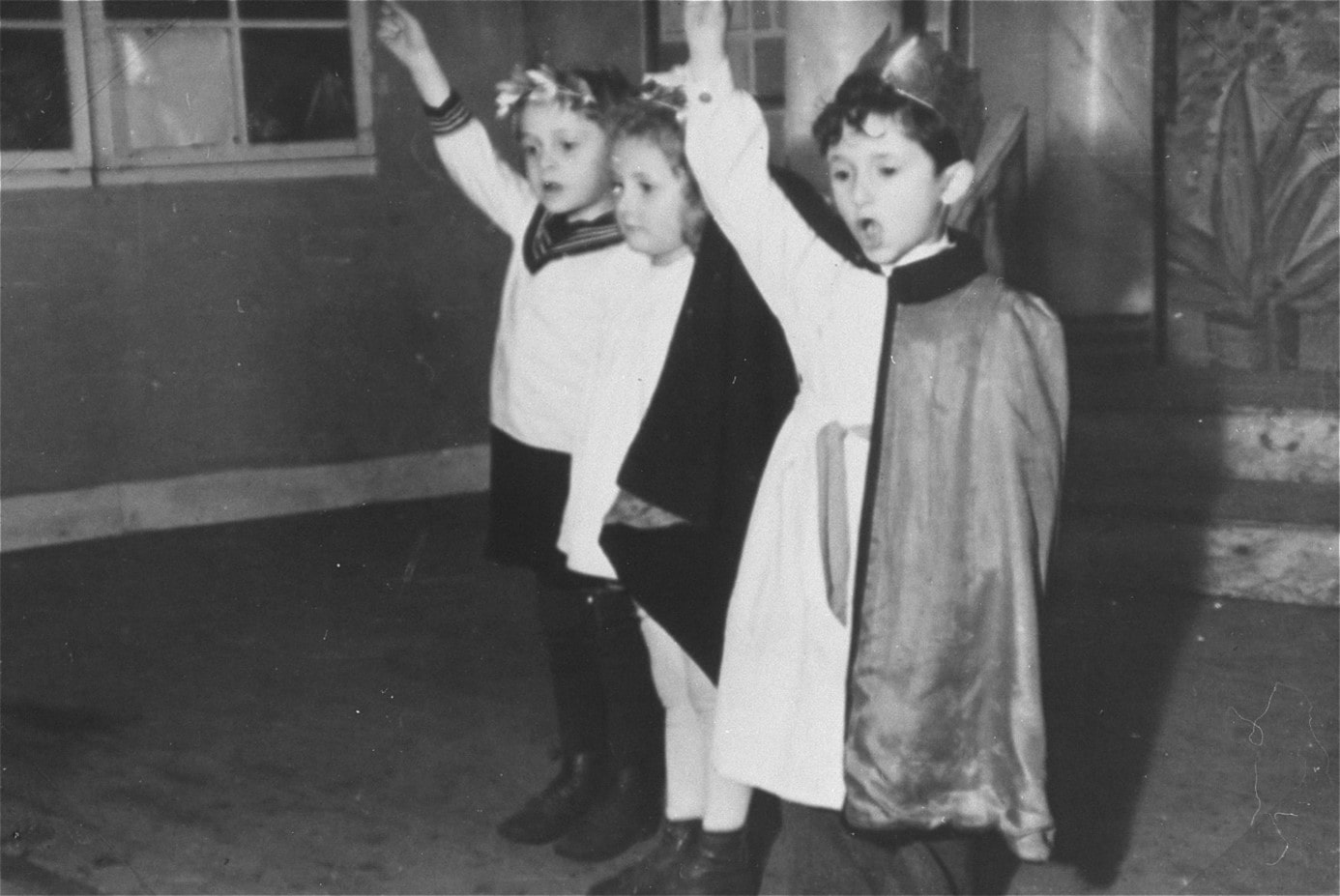
Purim shpiel in the DP Camp in Zeilsheim, Germany, 1946, USHMM 89614
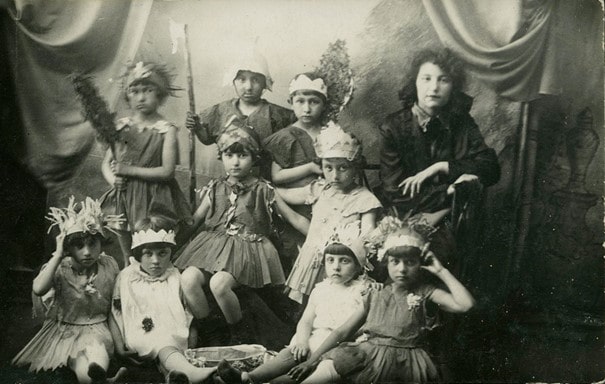
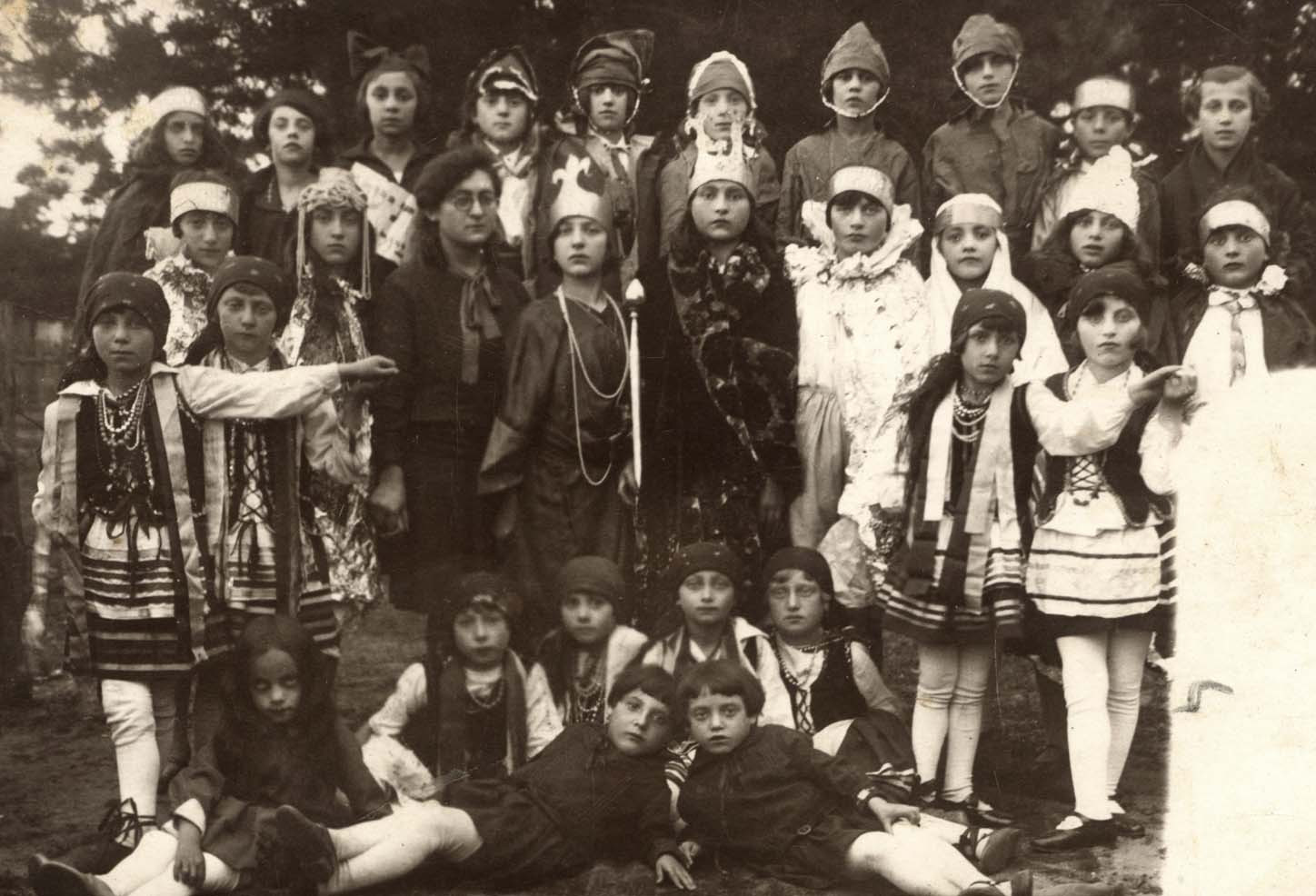
Rachel Kaleko with her students, Eišiškės, 1930’s
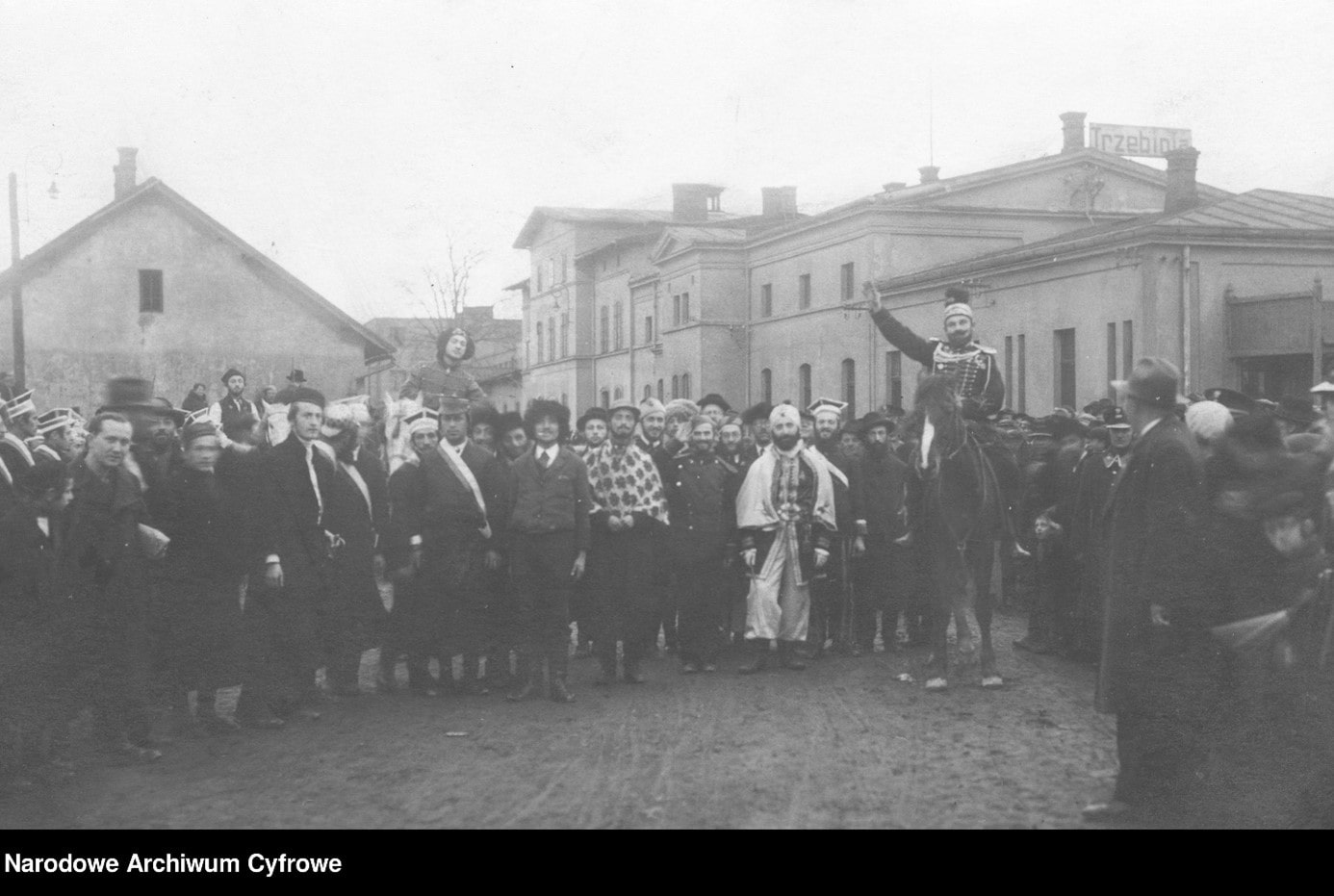
Purim in Trzebinia, from the collection “Koncern Ilustrowany Kurier Codzienny – Archiwum Ilustracji” of State Digital Archive, 3/1/0/15/1042a
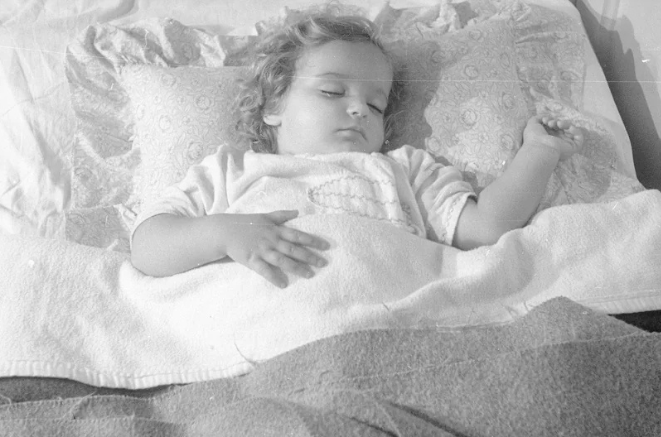
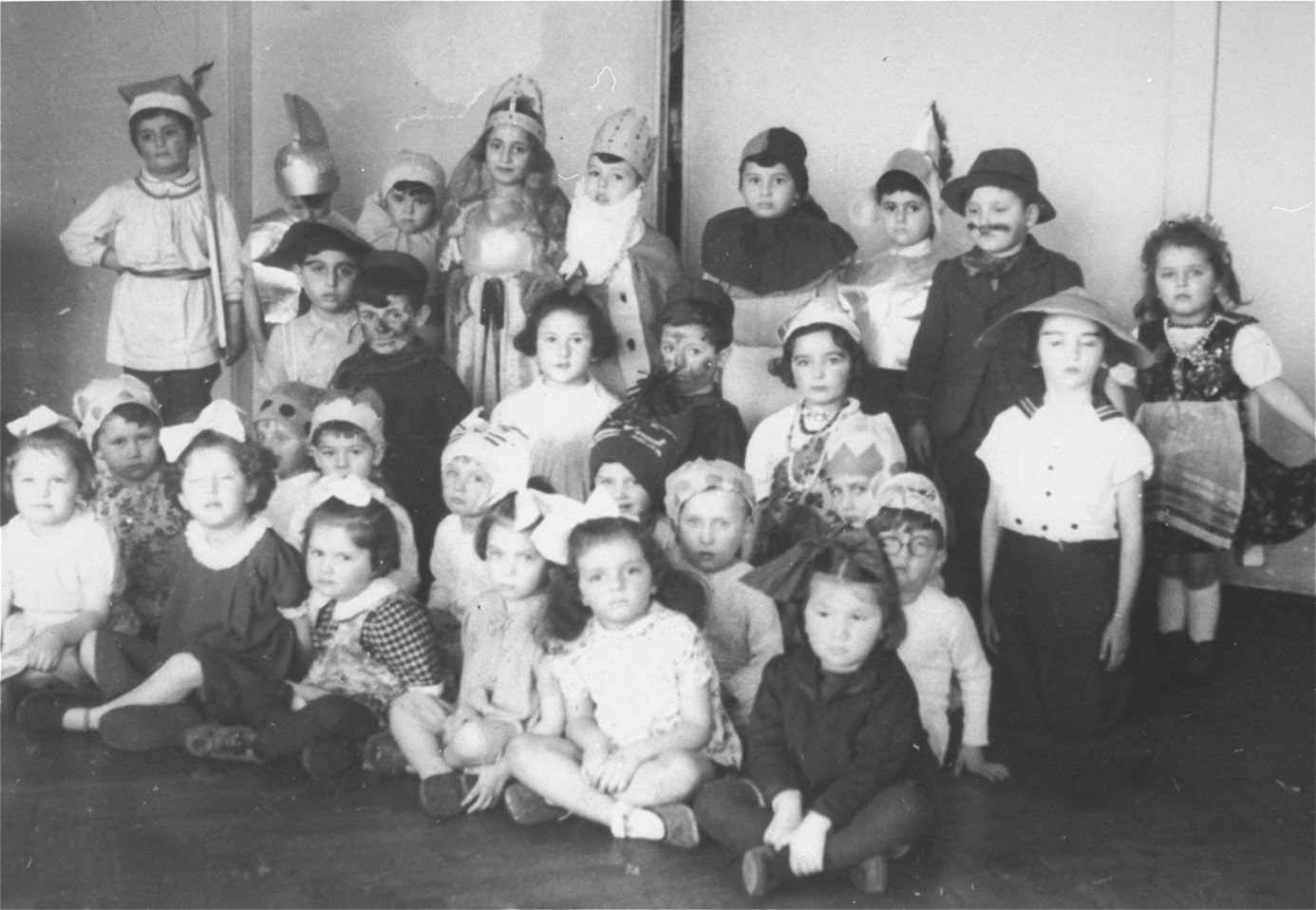
Children in the Jewish kindergarten in afterwar Łódź during the Purim shpiel, 1946-1952, USHMM 69482
Gdańsk,1930’s, USHMM 28392
Lithuania, 1930’s, USHMM 81947
Kaunas, 1930’s, USHMM 81934
Kaunas, 1930’s, USHMM 81930
Purim ball in Kaunas, 1932-1933, USHMM 21277
Szczecin, 1950’s, USHMM 24578
Children in an orphanage in Otwock, after the WWII, YV 4995/28
Ester Artzi from Rovne dressed up as a daughter of Zion, 1st of March 1939, YV 9568/6
Ester Wilhelm from Radomsko, YV 4643/16
Orphanage in Kraków, 1946-1947, USHMM 04985
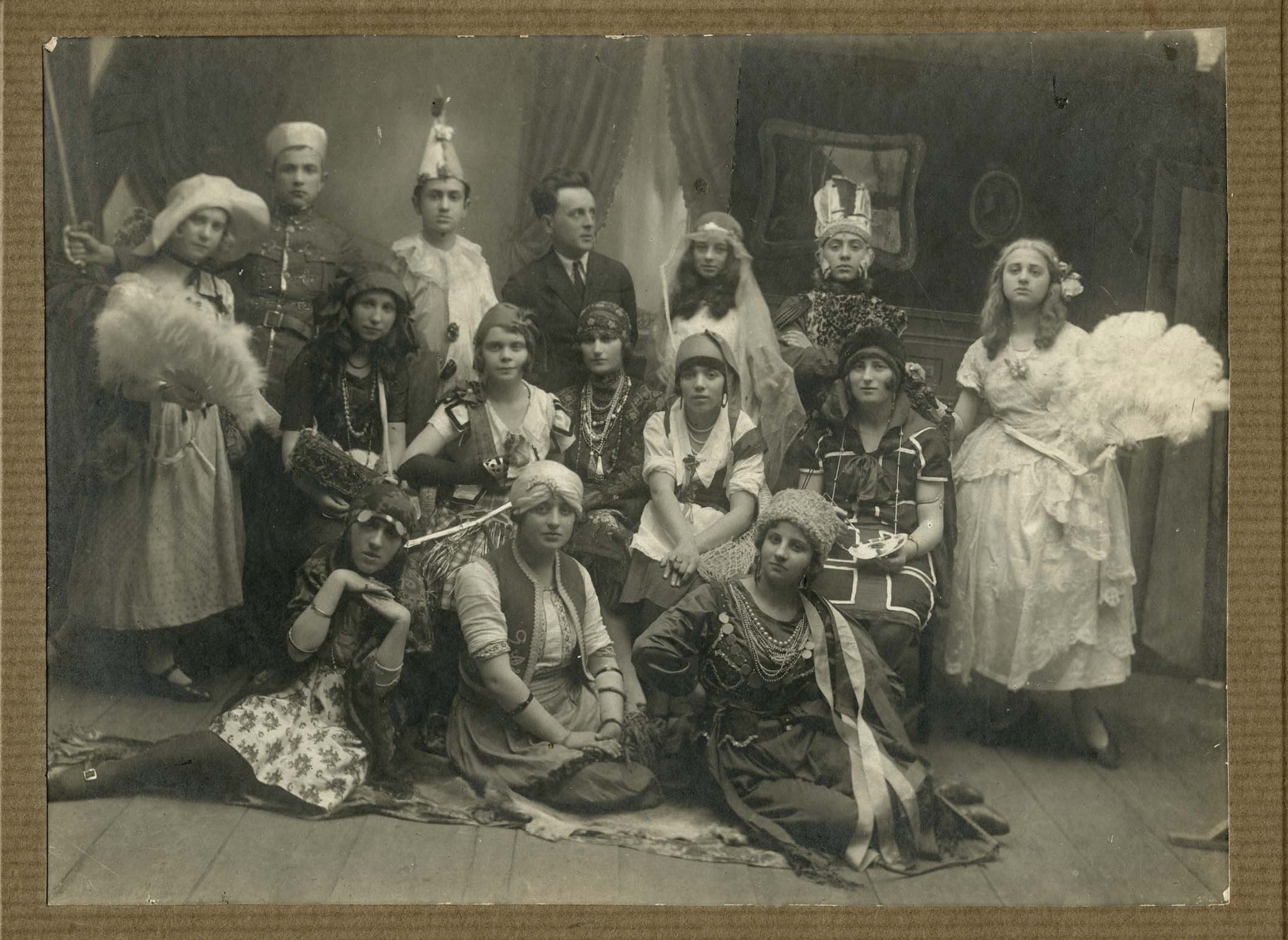
Warsaw, 1913-1924, Archive of Thomas Wolanin, DŻS IM p3/521
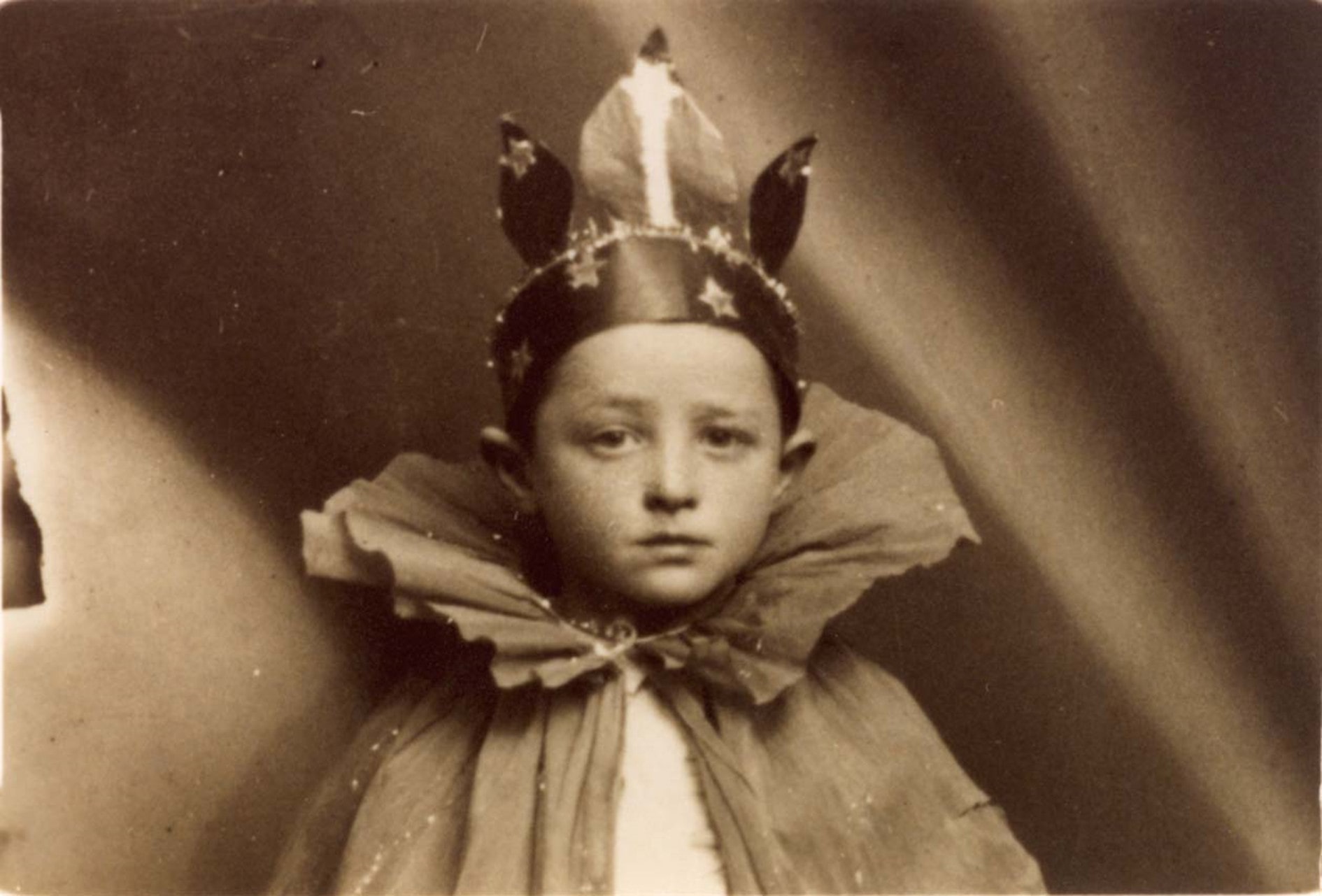
Perla Rozencwajg dressed up for Purim as a Kossack, Kowel, 1930’s, YV 6991/38
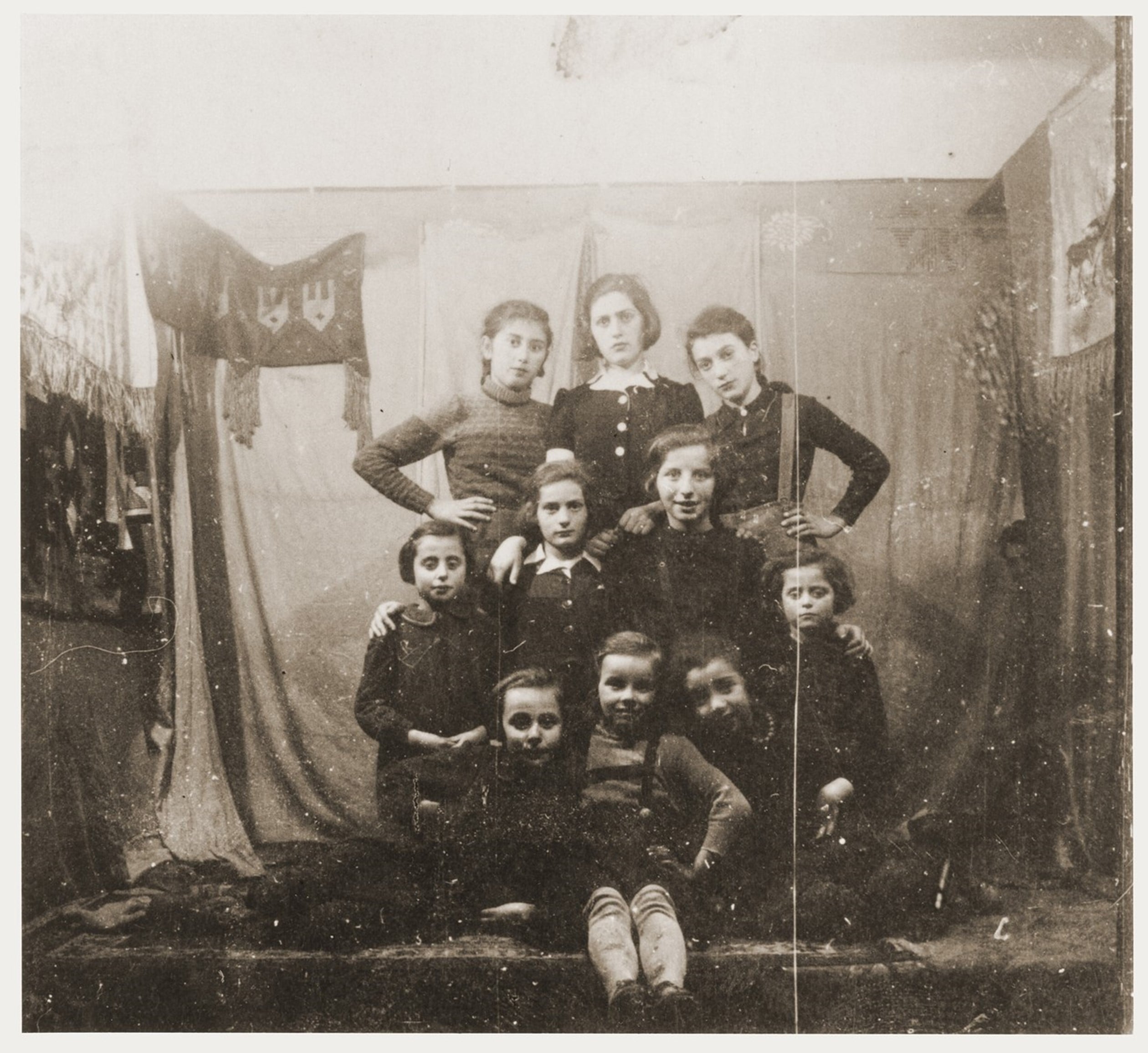
Perla Rozencwajg with her classmates, Purim, 1930’s, Kowel, YV 6991/41
Stanisławów, YV 15000/14205147
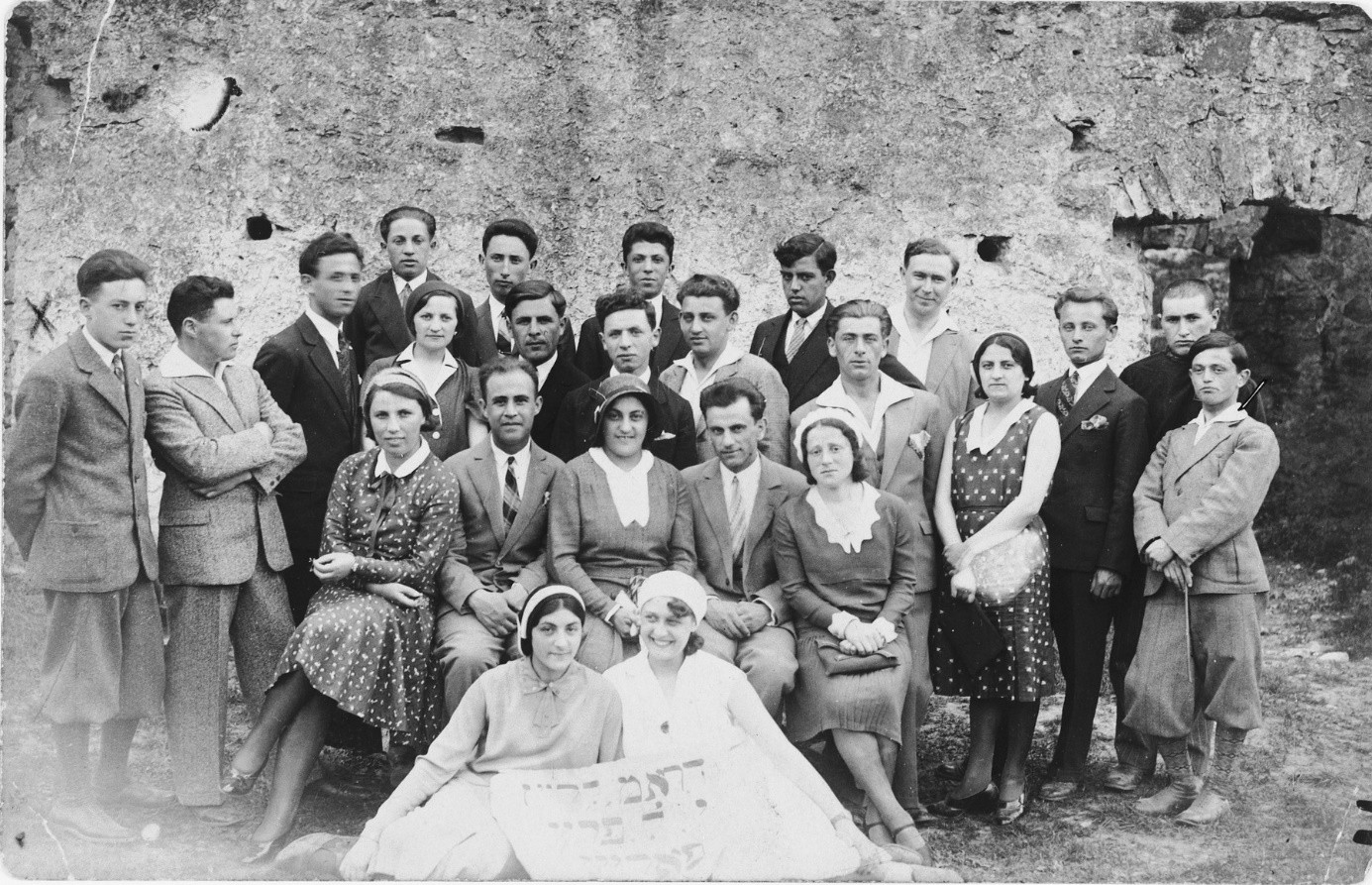
Students of the Vilner Lerer Seminar (Vilna Teachers’ Seminar) ready for the Purim shpiel. Among them: Batke Gliński, Artur Lermer, Grundman z Łódź i Lichtsyer from Bielsko, Vilna, 1925, USHMM 64226
Vilna, 1924, Y. Trupiański, Goldberg, Y. Mann, Rosenerg, Batke, Genia Kac (as a matzevah), USHMM 64224
School for girls Beys Yakov in Kolbuszowa, 1938, USHMM 67180
Ghetto in Żabno, March 1941, USHMM 32691
Trzebinia, 1938, YV 8882/2
Donia and Ester Serger, Obertyń, YV 10178/45
Judit Kula, Grójec, YV 7253/3
Szulamit Horowic, Białystok 1926, YV 15000/14239115
Ozer Goldsztein, 1930’s, Rovne, YV 15000/14261072
Students of the humanistic school in Lublin, March 1934, USHMM 85846
Meir Nekhemne Ornstein, Stryj, YV 15000/14169256
Members of the Y. L. Peretz theatre club in Czortków, USHMM 59806
Grodna, March 1920, YV 1366/222
Tomaszów 1937, YV 8849/13
Kaplan family from Aukštadvaris in Lithuania, 1st of March 1934, USHMM 21929
Temple family during the Purim meeting, Lviv 1939. From the left: Ziomek’s grandma, Ziomek Hammer with his grandpa Lev Temple, behind them: Gershon Temple, Lola Hammer, Heinrich Hammer, Arye Temple and Herman Hammer, USHMM 72095
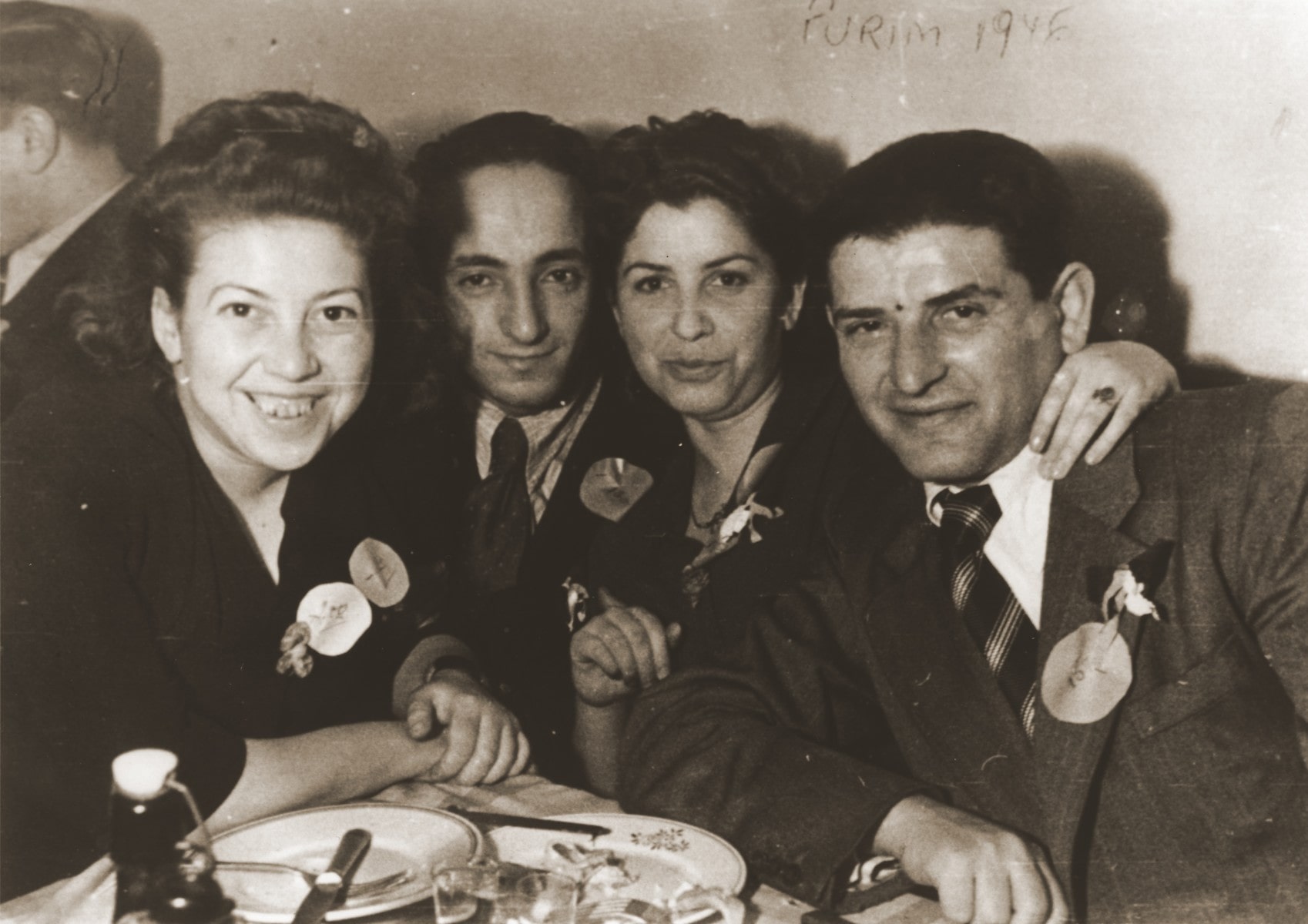
Purim party, Łódź, 1946, Felicja Berland with friends, USHMM 83377
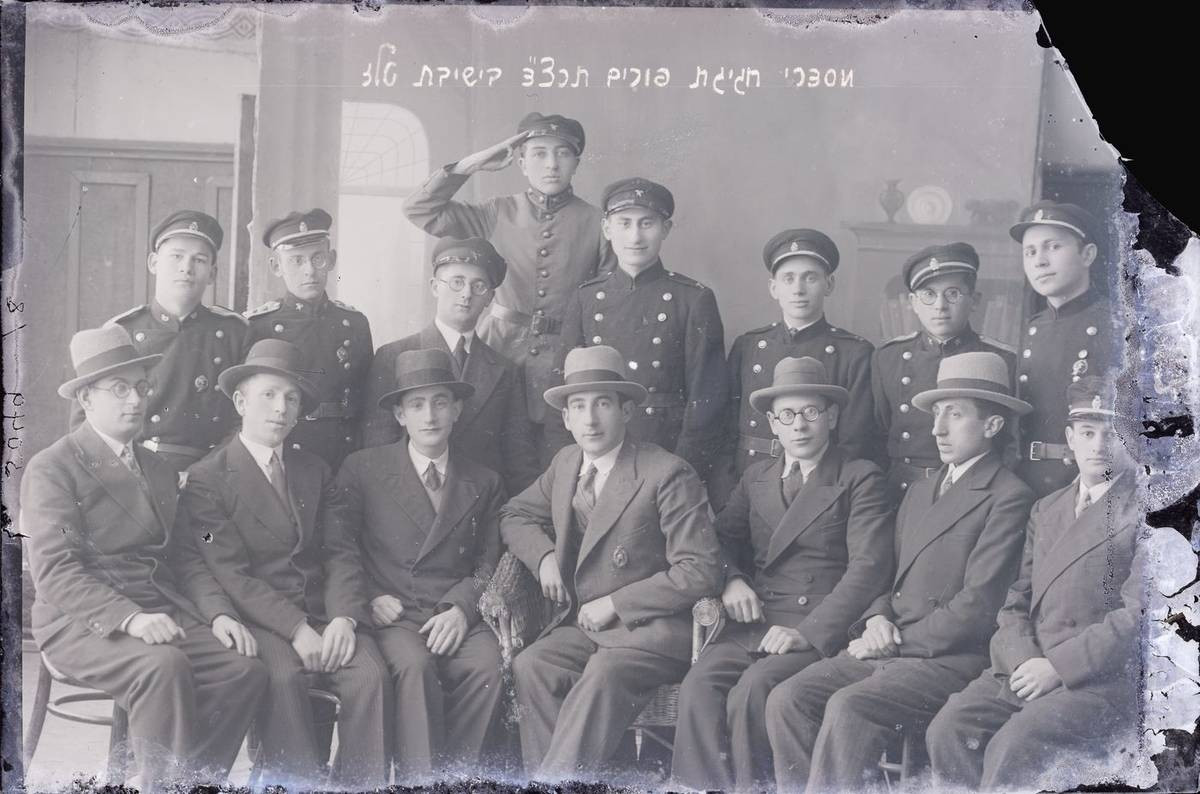
Purim in the yeshiva in Telšė, studio of Chaimas Kaplanskis, 1934, Žemaičių muziejus “Alka” LIMIS16229148
Falenica, Purim 1932, YV 7095/1
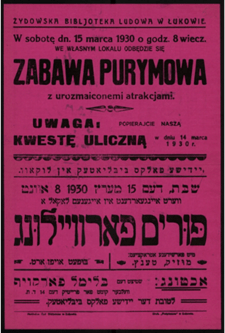
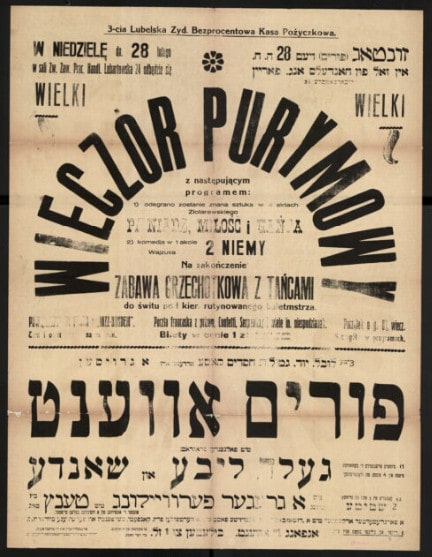
Invitations to the Purim parties:
Jewish Library in Łukowo / Żydowska Biblioteka w Łukowie, 1930, DŻS IK 2f
Lublin, 1926, drukarnia “Powszechna”, DŻS IK 2f 7980698
Lublin, 1926, drukarnia “Powszechna”, DŻS IK 2f 7980697
“Tarbut” Society in Biała Podlaska, 1920’s, DŻS IK 2f 103788689
Chess Players Club in Chełm, 1925, DŻS IK 2f 103335185
Związek Zawodowy Pracowników Handlowców w Lublinie, 1923, DŻS IK 2f 7946098
Ochrona dla dzieci i starców przy Gminie Wyznaniowej Żydowskiej w Lublinie, 1926, DŻS IK 2f 7980696
![Pre-war Polish countryside in archival photographs [GALLERY]](https://yrip.brkts.com/wp-content/uploads/2026/02/Miniaturka_polska_wies-1-1.png)