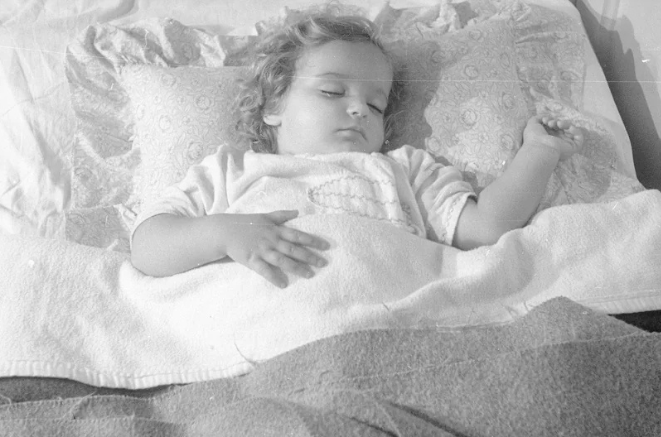

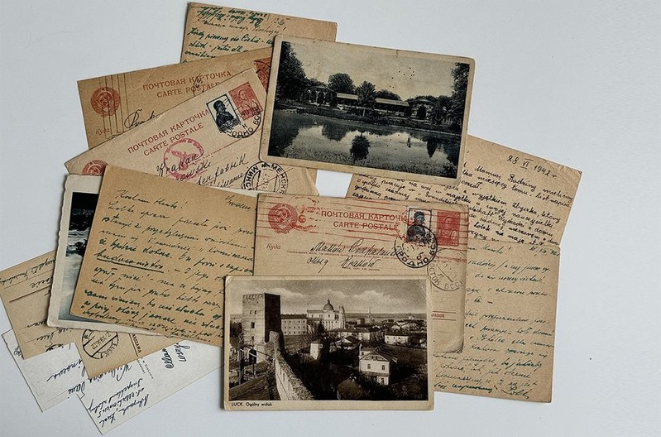
Genealogy is not just about the names and dates of our ancestors. It is primarily about discovering their lives. Every record, certificate, or forgotten photograph is a fragment of a larger story that makes up the history of a family. However, more and more often, this history also has a practical dimension. Skilful use of genealogy is becoming a tool that opens the way to specific rights and privileges.
In this article, we will look at two important issues in which Polish roots – properly proven – can play a key role. The first is confirming Polish citizenship, and the second is applying for a Pole’s Card. Both processes differ in nature, procedure, and legal consequences, but what they have in common is that genealogy becomes the foundation for documenting one’s rights.
Confirmation of Polish citizenship and Polish roots
The latest research shows that the Polish passport ranks 7th among the most desirable passports in the world! Confirmation of Polish citizenship is one of three ways to obtain Polish citizenship – and thus European Union citizenship! Importantly, there is no requirement to reside in Poland or know the language – the only prerequisite is documented Polish ancestry. The basis for this is the so-called principle of blood, according to which Polish citizenship is inherited from parents to children.
It is crucial to provide proof that your ancestor was a Polish citizen. This can be any original document issued by the Polish authorities confirming Polish citizenship – a citizenship certificate, ID card, passport, etc. These documents may be expired – this is even an advantage. If such documents have not been preserved in your home archives, collections in archives in Poland may prove helpful. However, it should be remembered that over the years, various regulations have been in force which, in certain circumstances, could result in the loss of citizenship. Their analysis can be complicated, which is why many applicants seek the help of specialized companies that are familiar not only with citizenship laws but also with current case law. If it turns out that citizenship has not been lost and the documentation is complete, the rest of the process is a formality. The interested person submits an application for citizenship, registers their civil status documents at the same time, and then, after the review is complete, obtains a Polish citizenship certificate.
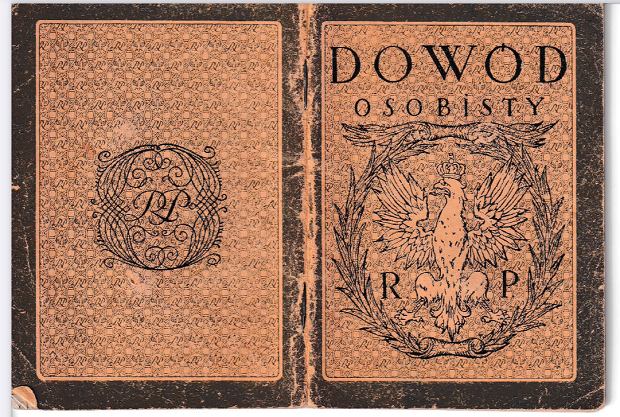
Confirmation of Polish citizenship and family history
Although in theory the procedure for confirming Polish citizenship is based on fairly clear rules—primarily the principle of blood and the need to document continuity of citizenship—in practice, there are always specific human stories and unexpected complications behind it. Each case involves not only an analysis of laws and regulations, but above all, family history.
We saw this clearly in the case of our client from the US. Her ancestors came from what is now Ukraine, which before World War II belonged to the Second Polish Republic – from the former Tarnopol Province. The client was convinced that confirming her citizenship would be a mere formality, as she had valuable family documents belonging to her great-grandfather Andrzej: copies of his baptism and marriage certificates, and even certificates confirming his service in the Polish Army before the war. However, it quickly turned out that the matter was not so simple. Andrzej’s documents, although extremely valuable from the perspective of family history, were not sufficient to confirm citizenship – due to the provisions of the Citizenship Act of 1920. It was this act that determined that Polish citizenship was granted to persons who had a permanent place of residence in Poland. Furthermore, the same provisions clearly state that children from a legal relationship acquire the citizenship of their father. Barbara and Jerzy married before 1951, which was the main reason why Barbara’s lineage could not be used. In practice, this meant that our client had to prove the citizenship of her grandfather Jerzy, and not that of her great-grandfather Andrzej or grandmother Barbara. And this is where the difficulties began – few documents about Jerzy had been preserved in the family, and an additional complication was that he came from Warsaw, where most of the archives were lost during the war and post-war reconstruction. Grandmother Barbara, on the other hand, was deported to the USSR, and then, together with Anders’ Army, she made her way to Africa and later to Great Britain, where she met Jerzy and they got married. Key evidence was still missing. The breakthrough came only when it was suggested that Grandfather Jerzy might have fought in the Polish Armed Forces in the West. We therefore commissioned a search of the archives of the British Ministry of Defense, and after a few weeks we received full documentation confirming his service in the 2nd Polish Corps. This was sufficient proof of Jerzy’s Polish citizenship. We were satisfied, and our client was moved to discover a significant piece of her grandfather’s history.
The Pole’s Card and Polish roots
Unlike the citizenship confirmation procedure, which is based on the principle of blood (Ius Sanguinis), the Pole’s Card requires proof of Polish origin in the national sense, not in the civic sense. In other words, it is not a question of whether an ancestor was a citizen of the Republic of Poland, but whether they declared Polish nationality. In practice, this means that documents such as a pre-war passport, a list of voters, or a certificate of military service are not sufficient proof, as they only confirm citizenship. Since 2019, the legislator has further restricted the list of documents, excluding, among others, religious certificates and information about place of residence.
The basis is therefore to prove Polish nationality in one of your direct ancestors:
- one of the parents,
- one grandmother or grandfather,
- or both great-grandparents at the same time (not necessarily married—they could be, for example, the paternal great-grandmother and maternal great-grandfather).
To this day, numerous declarations of nationality submitted after 1945 by people living outside Poland – in the USSR, the USA, or Canada – have been preserved in archives. If an ancestor indicated Polish nationality at that time, his descendants can apply for a Polish Card on this basis.
An equally important element of the procedure is the applicant themselves. Candidates for the Pole’s Card must submit a declaration of belonging to the Polish nation to the consul and demonstrate their connection to Polish culture. In practice, this means knowledge of the Polish language (at least at a basic level), as well as basic history, geography, and traditions – from the events of World War II, through the symbolism of national holidays, to customs associated with Christmas and Easter. On this basis, the consul assesses whether the person in question truly feels connected to Poland and Polishness.
The Pole’s Card grants a number of privileges: the possibility of obtaining a multiple-entry national visa free of charge, exemption from consular fees, the right to work in Poland on the same terms as Polish citizens, and finally, the opportunity to obtain permanent residence.
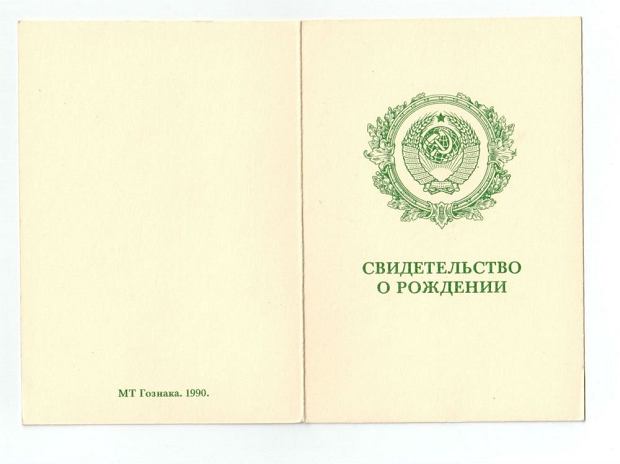
The Pole’s Card and family history
A year ago, we were approached by a client, a Ukrainian citizen, who had decided to move to Poland with her entire family. Polish had been spoken in her family home since childhood. Her grandfather came from the Liszczyński family, who had lived all their lives in the Zhytomyr region, specifically in the village of Stara Kotelnia near Andruszów. In this village, there is still a building of the former Roman Catholic Church of St. Anthony of Padua, which has been standing there since 1786 and gathers people who have never been Polish citizens but have always considered themselves ethnic Poles. To this day, they bear Polish names and surnames and cultivate traditions within their families. In all of our client’s civil status records, dating back to the Soviet era, a straight family line can be traced, in which her ancestors declared themselves to be of Polish nationality. The client recalled her childhood and told the Consul during a conversation about the Polish Card how her family celebrated Christmas twice a year – on December 24, they decorated the Christmas tree, prepared 12 Lenten dishes, and sang carols, but on January 6, they also sat down to a festive table. The family had always been proud of their Polish origins, so obtaining the Pole’s Card only strengthened their sense of pride in their national identity.
These stories show that behind every technical requirement and paragraph there are human destinies. It is these that make genealogy in administrative practice not just a matter of dry documentation, but also a journey into the past – in search of evidence that links the law with family history. Our company, Your Roots in Poland, helps in confirming Polish citizenship and obtaining the Pole’s Card.
![Pre-war Polish countryside in archival photographs [GALLERY]](https://yrip.brkts.com/wp-content/uploads/2026/02/Miniaturka_polska_wies-1-1.png)