
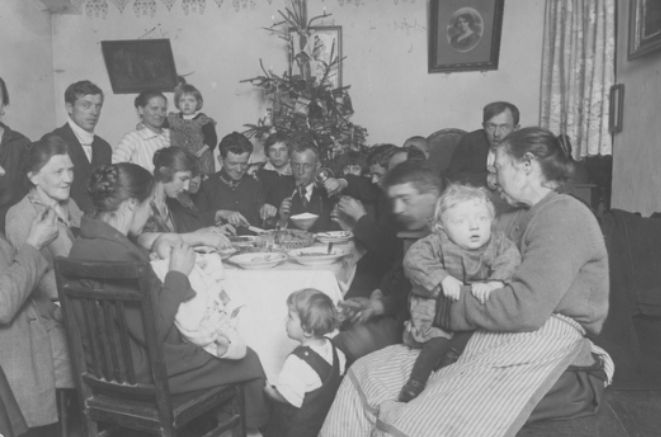
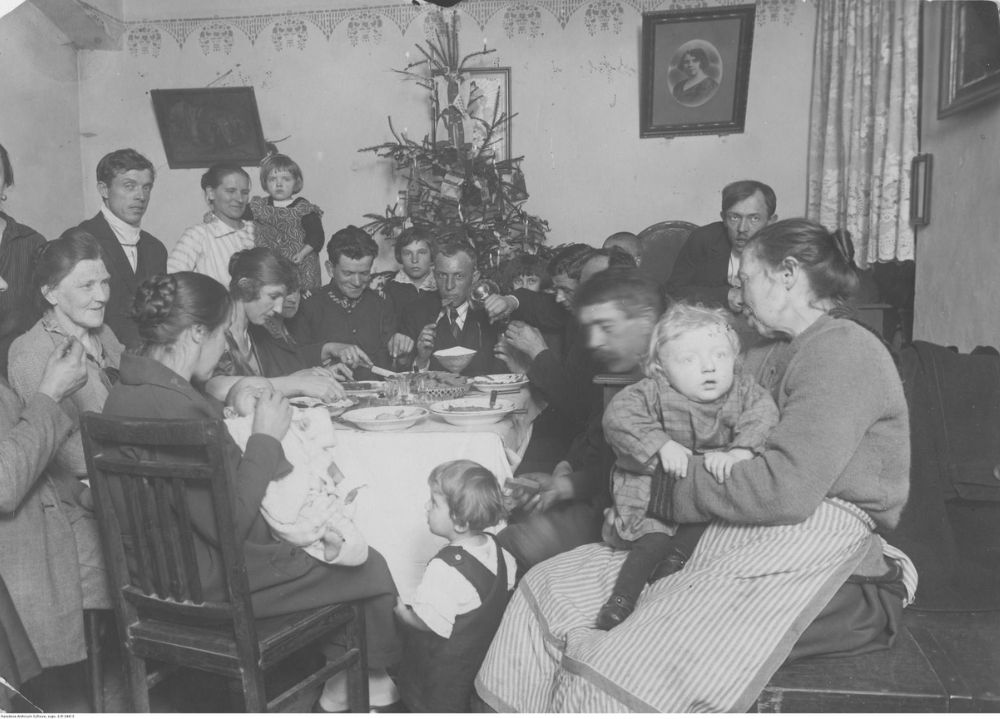
Did you know that you will probably spend this year’s Christmas Eve in the company of your mother-in-law, father-in-law, snecha and sneszka? If you are planning a large dinner and inviting extended family, then zełwa, szurzyn, and dziewierz may appear at the Christmas Eve supper, along with their wives, jątrewka and świeść, and their husbands, paszenog. These are old Polish terms for relatives.
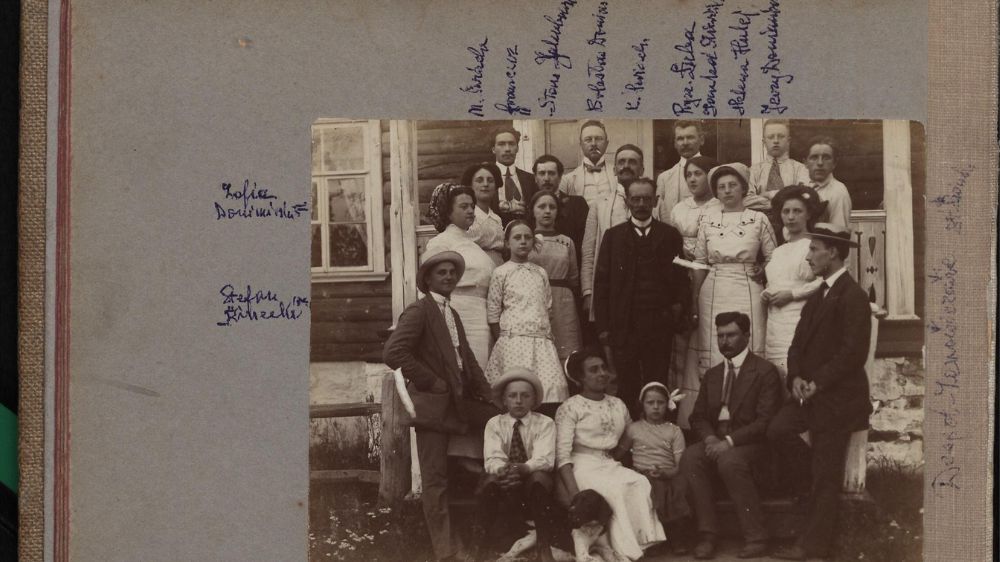
In Old Polish, there was a group of individual names that described family relationships and kinship between family members. Unfortunately, these names did not stand the test of time and are no longer used in contemporary Polish. The simplification and reduction of our vocabulary are the result of changes that have taken place in the modern family. Today, we need and maintain contact with distant relatives less often than in the past.
Old Polish terms for relatives?
When comparing Old Polish and modern names of family members, we can see that those referring to the closest relatives have undergone the least change. This mainly concerns first-degree relationships between parents and children, second-degree relationships between grandparents and grandchildren, and first-degree relationships in the collateral line between siblings and half-siblings. However, it is worth noting the differences that do exist. In the past, parent was a term used only for the father, who in a patriarchal society had full custody of the child, also called a czędem. Going further, grandparents referred to their grandchildren as wnęk and wnęka.
In the past, male descendants were considered closer family members, as they shared the same surname and, in the case of noble families, also the same coat of arms. The family on the father’s side was called relatives on the father’s side, and on the mother’s side, relatives on the mother’s side. The siblings of the father’s parents were referred to as uncles and aunts, sometimes also colloquially as stryjenka/stryjna for the wife of an uncle, i.e. the father’s sister-in-law. The father’s sister is simply called aunt. The siblings of one’s mother are always uncle or aunt. Today, often contrary to tradition, we use these names to describe the siblings of one’s father. The husband of an aunt was pociot, pociotek or naciot; this term was used to refer to both the husband of one’s father’s sister and the husband of one’s mother’s sister. The terms wuj and stryj were also extended to the cousins of one’s parents. The children of uncles and aunts who are not born are simply cousins.
In the past, men referred to their brothers’ children as nephews and nieces, while women referred to them as bratankami and bratanicami. The children of sisters were called nephews and nieces. According to some sources, the children of siblings were referred to generally as nieć/nieść and nieściora, while according to other sources, these terms referred to the children of cousins.
The children of our parents’ siblings are simply our cousins today. However, the traditional name for this relationship, still used in some regions of Poland, is cousins if they are on the mother’s side, or second cousins if they are on the father’s side. Sometimes, the children of the mother’s brother are also incorrectly referred to as second cousins, when they should be called uncle’s children. More distant relatives in the collateral line are our second and more distant cousins.
The Old Polish vocabulary did not forget about distant relatives either!
A relative is a person who is related to the spouse’s relatives but not related to them by blood. The way of determining family relationships is further complicated by the Old Polish dictionary of degrees of kinship, which, at the time of marriage, is extended to include the relatives of the person getting married. The parents of the husband or wife are now in-laws, i.e. father-in-law and mother-in-law. However, in the past, the husband’s parents were called świekier (świakier, świokier) and świekrew (świekra, swiekrucha). The wife’s father and mother were referred to as cieść and cieścia, from which the modern terms teść and teściowa are derived. The husband of the daughter was, as today, zięć, while the son’s wife, the wife of the son, was referred to as snecha, sneszka.
Sister-in-law and brother-in-law are modern terms for the siblings of one’s spouse. A sister-in-law is also the husband of one’s sister. However, in the past, each of these relationships had its own name. The husband’s sister was called zełwa, zołwa, zełwica, żółwica or żełwia. The husband’s brother was called a dziewierz, his wife was called a jątrew or jątrewka, and the same name was sometimes used to refer to the brother’s wife, i.e. today’s sister-in-law. In Old Polish, the sister’s husband was referred to as swak. The wife’s brother was referred to as szurzy, sometimes szurza or szurzyn. If a wife had a sister, she was called świeść, and her husband was sometimes referred to as paszenog.
In summary, few people today realize that the modern terms we use to describe family relationships and affinities are only a small part of what existed in Old Polish. It is therefore worth recalling old traditions at the holiday table and trying to describe the relationships between us and our loved ones in a new way, using Old Polish terms.
![Pre-war Polish countryside in archival photographs [GALLERY]](https://yrip.brkts.com/wp-content/uploads/2026/02/Miniaturka_polska_wies-1-1.png)