
Genealogical research is an exciting journey into the past… genealogy is becoming an increasingly popular hobby and is attracting a lot of interest among the general public. In the past, it concerned only great, royal, and magnate families and was aimed at strengthening social positions and divisions. Nowadays, families want to learn more about those who are no longer with us—for some, genealogy is a way to discover their roots, for others, it is a fascinating adventure and passion. Where to start if we want to explore the history of our ancestors? In this supplement, we will show you how to go back in time.
First steps – organize your knowledge
At the beginning, it is most important to organize what you already know. Write down your family tree starting with yourself, including first names, last names, maiden names, places of origin, parishes, and dates, even if approximate. After completing this step, it is worth reviewing your family archives. Many homes have documents and mementos of ancestors, which will serve as clues for further research. These may include copies and extracts of birth, marriage, or death certificates, school records, property deeds, letters, or even diaries. At each stage of gathering information, it should be studied, analyzed, and assigned to a specific person in the family tree.
The past captured in photographs
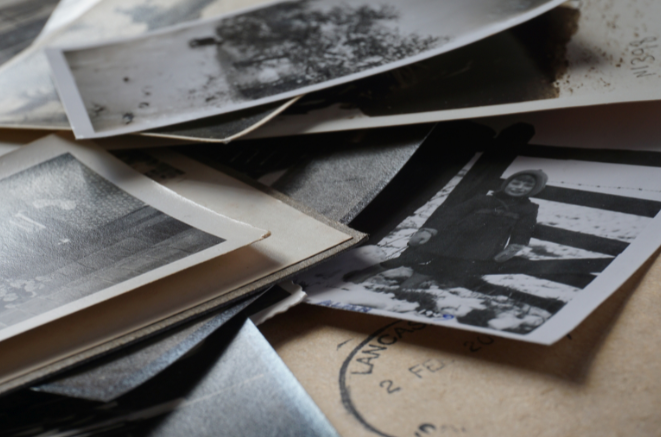
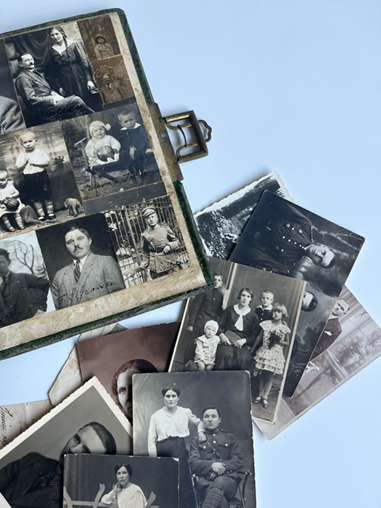
Another extremely important item in family collections are photographs – they are a window through which we can look into the past. It is important to pay attention to who and what they depict. Sometimes, some of them are described, e.g., on the back, or have the name of the photo studio. If the photograph does not contain such information, but we know who or what is depicted, we should write a note on the back in soft pencil – giving the date or period when the photograph was taken, the place, its name, or the names and surnames of the people photographed. All such finds should be scanned – in this case, you can use your phone, as most of them have this function built in. Paper photos should be stored in special acid-free boxes to prevent them from fading or tearing.
The key is to talk
After organizing the materials from the family archive, it is worth talking to the oldest members of the family. Grandparents, aunts, uncles – each of them may have valuable information, and sometimes even small memories can lead us to discover our family history. Keep in mind that even if we don’t establish any new facts, we will always receive memories from our loved ones – more or less colorful. This is microhistory – our ancestors and their lives, with historical events or periods in the background. What to ask about? First of all, basic personal data: births, marriages, deaths, places, parishes, as well as addresses, family religion, multiculturalism, school, military service, work, emigration among loved ones. Memories of family traditions, legends, and family heirlooms will also be interesting. It is a good idea to record these conversations or write them down in the form of notes.
A visit to the cemetery
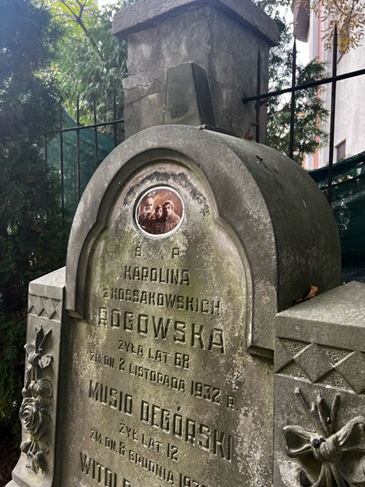
Cemeteries are not only places of remembrance, but also a source of much information. By reading the gravestones of our ancestors, we can establish or supplement further facts about their lives. In the case of some graves, in addition to basic data, we can learn about their profession, occupation, or contributions to the city or a specific community. It is important to note whether our loved ones are buried alone or with other people, as this suggests their family connections. Sometimes there are also photographs. Such a visit will help to verify what we already know, but it may also enable us to determine who is in our family photographs.
Basic genealogical sources
The next step is to learn the theory, which we will later put into practice. Documents for genealogical research can be found in civil registry offices, company archives, state archives, and church archives, and the sources themselves can be divided into metric and non-metric. The former are documents created for the purpose of registering births, baptisms, marriages, and deaths, and were produced by church and state institutions. They are certainly one of the most important sources for genealogists. The obligation to keep registry books was introduced in the second half of the 16th century, so with a little luck, we can trace our ancestors back to that period. Before the partitions, they were kept in Latin. Changes in this matter occurred as a result of the three partitions of Poland. Different administrative laws applied in each of the partitions. In the Russian partition, records were kept in Russian, in a descriptive manner; in the Prussian partition, they were kept in German in tabular form; in the Austrian partition, they were kept mainly in Latin, also in tabular form.
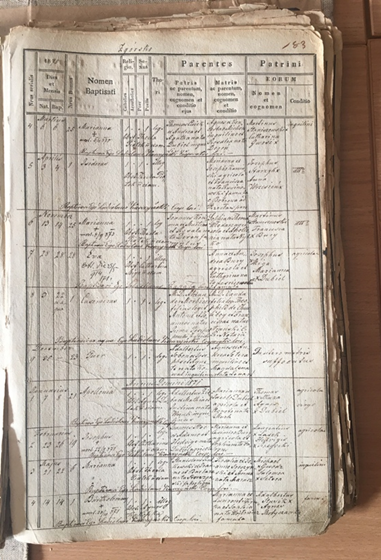
The individual registers contained information such as: house number, town, date of birth and baptism, name of the baptized child, first and last names of the parents, legal status, sometimes occupation or social status, godparents; for marriages: date of marriage, first and last names of the newlyweds, their parents and witnesses, age and place of origin. Death records included: place of residence, date of death, date of funeral, first and last name, age, and cause of death. There was also information about the administration of the sacraments before death. Depending on the partition or the specific nature of the work of a particular parish, these records could vary in terms of detail and volume.
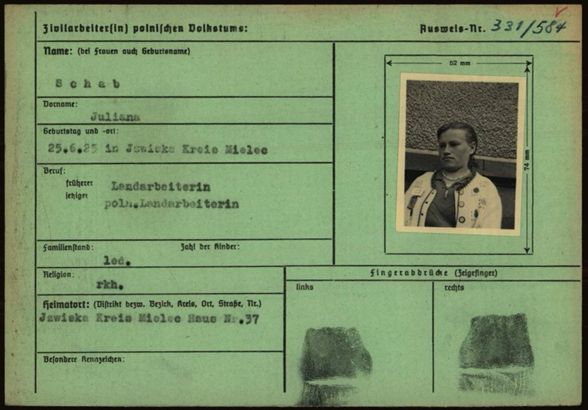
In addition to this basic source, which is the registry books, we can also refer to population censuses, permanent population registers, registration books, registers of specific cities or towns, identity documents, e.g., ID cards, passports. During the German occupation, special identity cards called Kennkarten were issued. Genealogical research can also make use of school records – school and university ID cards, certificates, diplomas, student registers and report cards – as well as employment records – employment certificates and employee personnel files. Similarly, it is worth paying attention to court records, mortgage records, property records, inheritance records, guardianship records, as well as camp records, forced labor records, and military records.
Where can you find information about your ancestors without leaving home?
To use online databases, you need to know who you are looking for. It is essential to check which registry office or parish your ancestor belonged to. It is important to remember about administrative changes in the past, so you need to trace them carefully. In this context, we can use, for example, the online Geographical Dictionary of the Kingdom of Poland and other Slavic countries, or indexes such as Index of all localities located in the Kingdom of Galicia and Lodomeria together with the Grand Duchy of Krakow or Index of the Kingdom of Poland, i.e. an alphabetical list of cities, villages, farms, colonies, and all nomenclatures in the provinces of the Kingdom of Poland, the database www.kartenmeister.com, www.meyersgaz.org, or the korzenie.online portal, where you can find lists of registry offices and parishes.
Here is a list of free websites that are extremely useful for genealogical research:
Geneteka
The largest Polish database of civil records, containing indexes from various regions of Poland.
https://geneteka.genealodzy.pl
Poznan Project
A regional database containing indexes of registry books and other archival documents from Poznań and the surrounding area.
https://poznan-project.psnc.pl
BaSIA
A regional database covering Greater Poland, Kujawy, and Pomerania, containing indexes of registry books and other archival documents.
https://www.basia.famula.pl
Lubgens
Genealogical database for the Lublin region, including indexes of parish registers and population censuses.
PomGenBaza (Pomorskie Towarzystwo Genealogiczne)
A database of civil records from Pomerania, Kashubia, and the surrounding areas, containing records of baptisms, marriages, and deaths.
http://baza.pomorskie.to
Świętogen
The regional database covering the Świętokrzyskie region and beyond contains indexes of registry books and other historical documents.
http://swietokrzyskie.genealodzy.pl
FamilySearch
A portal offering access to a vast number of databases, archives, and documents from around the world.
Szukajwarchiwach
A portal that allows users to search the resources of Polish state archives, containing documents including registry records and population censuses.
https://szukajwarchiwach.gov.pl
Arolsen Archives
Archive of documents concerning persons persecuted during World War II and displaced persons, forced laborers, etc.
https://arolsen-archives.org
Indeks represjonowanych (IPN)
A database of people who suffered repression during World War II and in the People’s Republic of Poland, created by the Institute of National Remembrance.
https://indeksrepresjonowanych.pl
ANNO (Austrian Newspapers Online)
A digital archive of Austrian newspapers, useful for researching people from Galicia and Austria-Hungary.
https://anno.onb.ac.at
Ellis Island Passenger Search
List of passengers who arrived in the US via Ellis Island.
https://www.libertyellisfoundation.org/passenger
Further searches
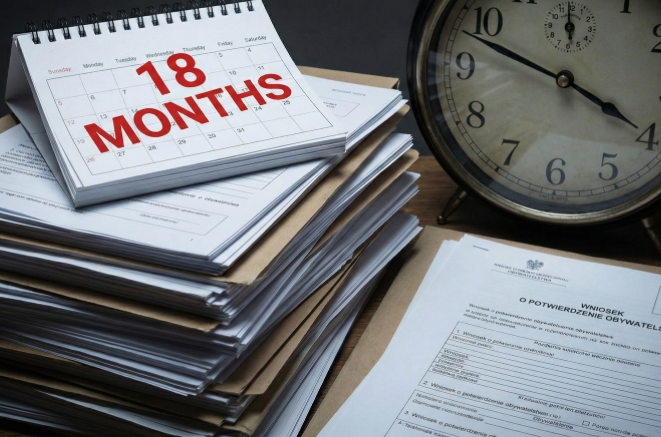
Unfortunately, not all materials have been digitized and posted online. Further research requires greater effort and familiarization with the procedures for obtaining documents from specific institutions. At registry offices, we can request abridged or full copies, but it should be remembered that birth certificates and collective records are stored for 100 years in the case of birth certificates, and 80 years in the case of marriages and deaths. After this period, the documents are transferred to the relevant regional state archive. Some of them have certainly been posted online on the aforementioned website www.szukajwarchiwach.gov.pl. If they are not there, you should visit the archive building – you will then need to complete an archival resource user application and a special receipt. Anyone can use the state archive, and it is most convenient to read about the rules of access on the website of the selected archive. Church archives are another type of archive where you can find registry books. In Poland, they are divided into archdiocesan, diocesan, and parish archives. Unfortunately, in this case, there are no rules that standardize access – it all depends on the managers of the archive in question.
Where to build your family tree?
From the very beginning of gathering information about our ancestors, we should ensure that we have a suitable place to store it. This can be done in the traditional way, but there are many applications and websites that can facilitate the construction of a family tree. All files are saved in GEDCOM format, a standard that allows us to upload our findings to other portals.
Here is a list of offline programs:
Ahnehbkatt
Legacy Family Tree
Family Tree Builder
PLSoft
Drzewo Genealogiczne 2.0
Here is a list of the most popular online portals:
MyHeritage
FamilySearch
Ancestry
In genealogy, we must be detectives on the trail, using clues to solve family mysteries. Each discovery can lead to new, fascinating information and sometimes to unexpected secrets. However, if you prefer to seek professional help, please contact us…
![Pre-war Polish countryside in archival photographs [GALLERY]](https://yrip.brkts.com/wp-content/uploads/2026/02/Miniaturka_polska_wies-1-1.png)